
Liverpool’s history is packed with big nights, bigger trophies and some of the most passionate support in the game. It is no surprise, then, that Liverpool programmes are among the most collected and talked-about items in the hobby. From fragile pre-war issues to European Cup finals and modern Champions League glory, each programme is a paper time capsule of the club’s story.
This guide looks at some of the most collectable and most valuable Liverpool programmes, why particular issues command attention, and what collectors should check before treating an asking price as a realistic value. Historic auction results are useful evidence, but they are snapshots rather than guaranteed current valuations: condition, edition, provenance and the number of serious buyers can all change the price.
What makes a Liverpool football programme valuable?
Age matters, but it is only part of the story. The strongest prices tend to appear where several factors come together: genuine scarcity, an important fixture, strong condition and confidence that the programme is an original issue rather than a later reprint.
Collectors should also distinguish between historical importance and market value. A programme from a famous match may be highly desirable but still relatively common. By contrast, an obscure early fixture can command more because so few copies survive.
Useful checks include:
- Originality: confirm that the programme is an original issue and not a replica or later reprint.
- Completeness: check for missing pages, tokens, inserts, team sheets or vouchers.
- Condition: folds, tears, writing, stains, staple rust and repairs can materially affect value.
- Edition and variant: local-language editions, special souvenir issues, different printings and withdrawn covers can have very different markets.
- Provenance: a credible history can matter, particularly for signed or unusual items.
- Comparable sold prices: completed auction results are generally more useful than current asking prices.
Early Anfield rarities
At the very top end of the market sit the earliest home programmes from the 1890s and early 1900s. Many were printed in small numbers, often on inexpensive paper that was never expected to survive for generations.
Any genuine pre–First World War Anfield issue can be scarce, and programmes from Liverpool’s first seasons in the Football League sit in a completely different collecting category from mass-produced post-war issues. Condition is often lower by modern standards, but survival itself is part of the rarity.
For serious collectors, these early issues are foundation pieces: evidence on paper of Liverpool’s emergence from a local side into a league club.
The 1914 FA Cup Final: rarity backed by auction evidence
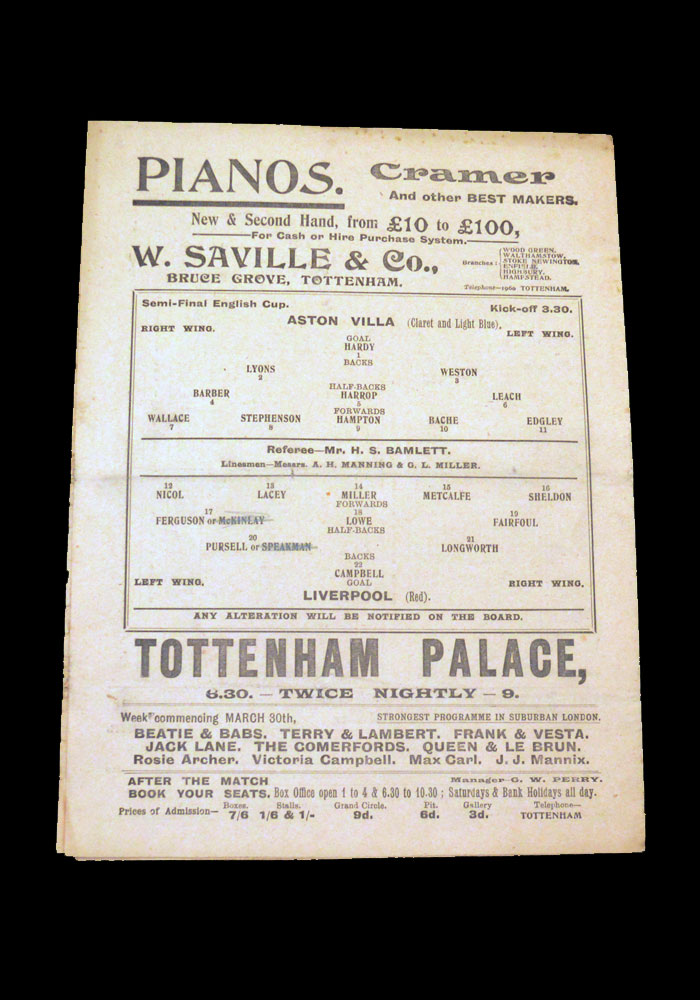
Liverpool’s first appearance in an FA Cup Final came against Burnley at Crystal Palace on 25 April 1914. Liverpool lost 1–0, but the programme has become one of the clearest examples of how age, occasion and scarcity can combine.
Published Graham Budd auction results show how strongly original examples can perform. A regular 1914 final programme with an area of paper loss along the top margin recorded a winning bid of £4,000 in May 2015. A Royal Box edition of the same final recorded a winning bid of £1,500 in November 2010.
Those figures should not be treated as a current price guide. They do show why collectors should verify the exact edition and condition before comparing values: two programmes from the same match can represent very different propositions.
-

Aston Vila v Liverpool 28.03.1914 (English Cup Semi Final)
-
Burnley v Liverpool 14.03.1914

The 1928 Kop-opening souvenir programme
Another important pre-war Liverpool issue is the souvenir programme produced for the opening of the completed Spion Kop stand against Bury on 25 August 1928. Its significance goes beyond the league fixture because the Kop became central to Liverpool’s identity.
Documented Graham Budd results provide useful reference points. One example sold for a winning bid of £600 in May 2014, while another described as having exterior and interior wear sold for £550 in June 2021.
Again, these are historical results rather than present-day valuations. They are useful because they show that a clearly identified special edition can have a stronger collector market than an ordinary fixture from the same era.
Post-war Anfield and the 1950 FA Cup Final
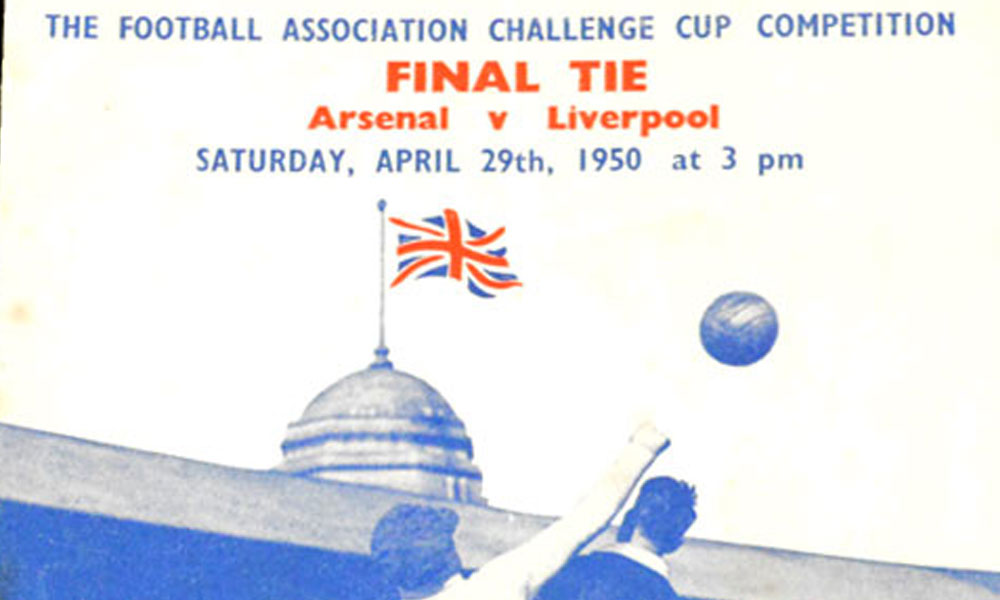
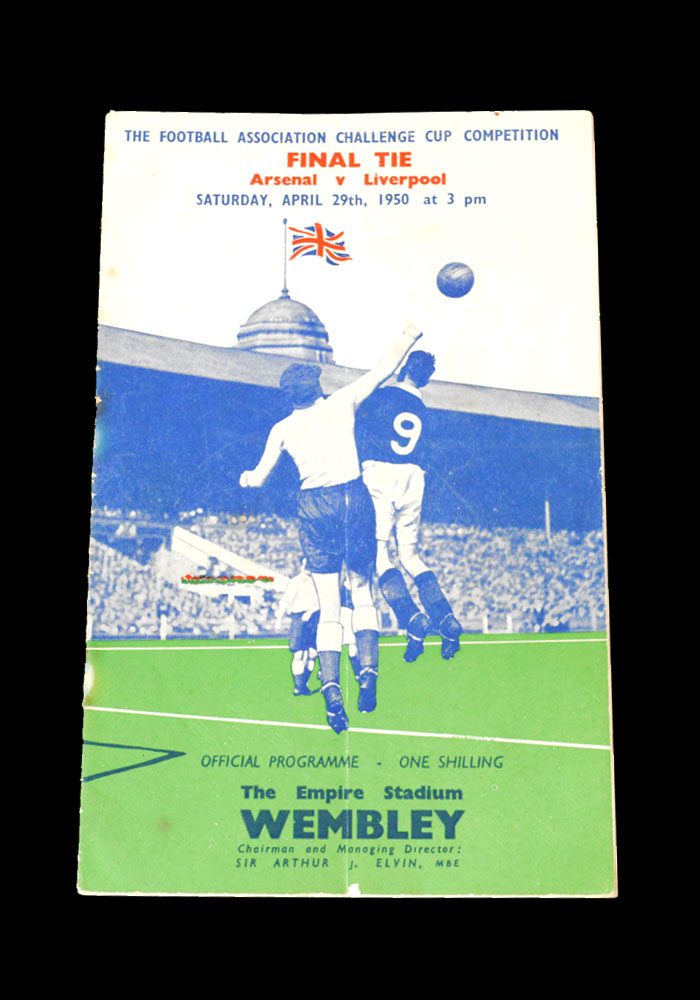
The 1950 FA Cup Final against Arsenal at Wembley is another key entry in any list of notable Liverpool programmes. It was Liverpool’s first post-war final, and many supporters retained the programme as a souvenir of the occasion.
As with many mid-century finals, value depends heavily on condition, writing, completeness and whether any original inserts or token pages remain intact. The historic importance of the fixture gives the programme a clear collecting story, but collectors should still compare like with like when judging price.
Alongside Wembley, home programmes from the late 1940s and early 1950s can appeal to collectors building complete seasonal runs rather than concentrating only on finals.
-
Arsenal v Liverpool 29.04.1950 - FA Cup Final
-
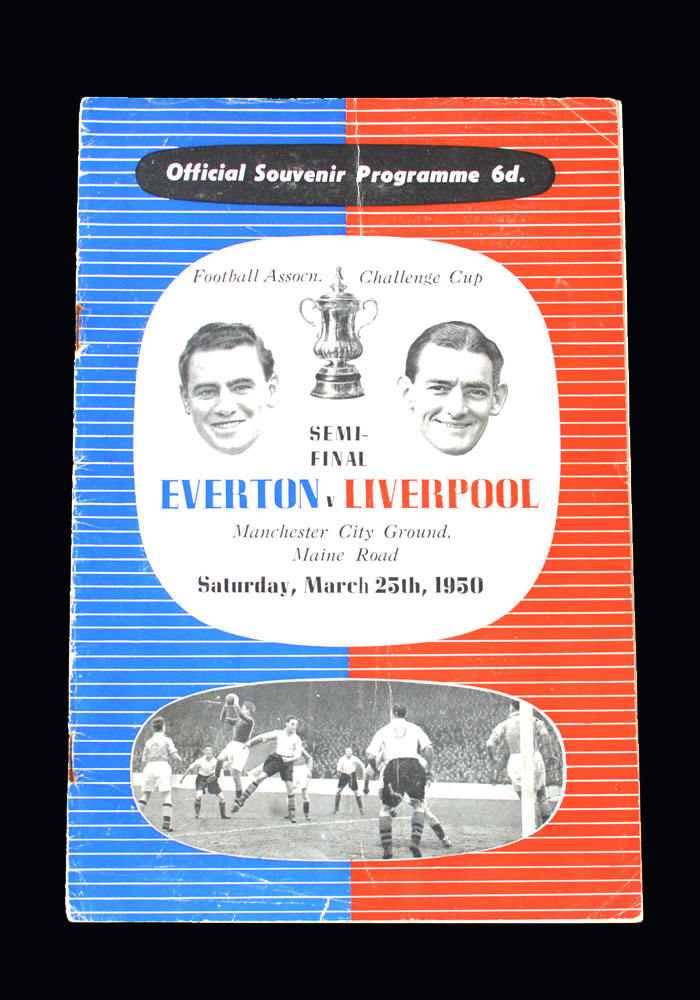
Everton v Liverpool 25.03.1950 - FA Cup Semi Final
-
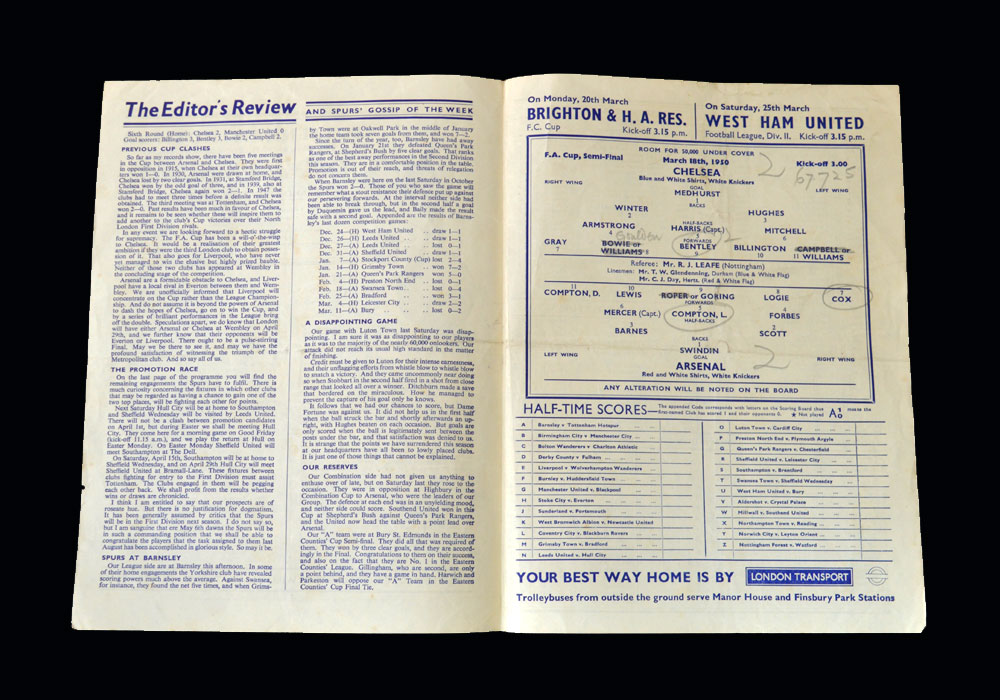
Chelsea v Arsenal 18.03.1950 - FA Cup Semi Final
Shankly, promotion and the first great side
By the early 1960s, Bill Shankly was transforming both team and club. Programmes from key milestones in that era remain natural targets for Liverpool collectors:
- Promotion back to the First Division
- The 1963–64 title-winning season
- Early European nights at Anfield
These issues are generally easier to find than pre-war rarities, but they sit in a strong collecting period where nostalgia, design and football history come together. Cover layouts, advertising and editorial style also changed noticeably from season to season, giving collectors another reason to build complete runs.
1965: lifting the FA Cup at last
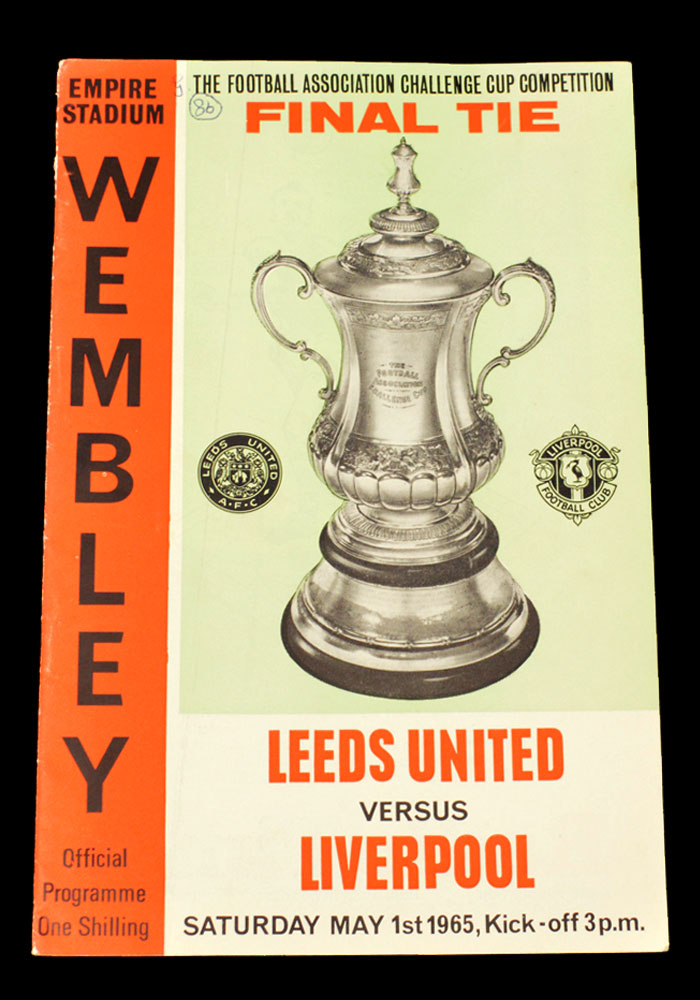
For Liverpool supporters, 1965 is a landmark. After decades of trying, the club finally lifted the FA Cup, beating Leeds United at Wembley.
The match programme is widely collected because the occasion is so important to the club’s history. However, a famous match does not automatically make every surviving programme exceptionally rare. Condition becomes particularly important when plenty of copies were retained by supporters.
A handled copy with folds and team changes can still have strong sentimental appeal, while a clean, complete example is likely to attract a different type of buyer.
-
Liverpool v Chelsea 27.03.1965 (FA Cup semi final)
-
FA Cup Final | Liverpool v Leeds 01.05.1965

European glory: Rome, Wembley and beyond
Liverpool’s rise as a European force in the 1970s and 1980s produced a series of programmes that form the backbone of many collections:
- 1973 UEFA Cup Final
- 1977 European Cup Final v Borussia Mönchengladbach
- 1978 European Cup Final v Club Brugge
- 1981 European Cup Final v Real Madrid
- 1984 European Cup Final v Roma
The 1977 European Cup Final is a useful illustration of why specification matters. Sheffield Auction Gallery recorded a standard 128-page grey-cover programme selling for £140 in July 2024. Graham Budd recorded a signed example from the same final, bearing fifteen autographs, selling for £380 in December 2023.
The difference is not a simple rule that signatures always multiply value. It shows why collectors need to compare the exact item: edition, signatures, authentication, condition and provenance can all change the market.
European home ties can also be highly collectable because they connect directly to famous Anfield nights. For many supporters, the story behind a quarter-final or semi-final is as compelling as the final itself.
Tragedy and remembrance
Any overview of Liverpool programmes has to acknowledge the more sombre side of collecting. Programmes associated with Heysel in 1985 and Hillsborough in 1989 sit in a sensitive space where historical significance and remembrance matter more than treating the item as simply another rarity.
Some collectors choose not to pursue these issues; others retain them as part of a commitment to remembrance and education. They should be described and handled with appropriate context.
Istanbul and the modern era
The 2005 Champions League Final in Istanbul is already firmly established as an important modern Liverpool programme. It connects directly to one of the club’s best-known matches and has strong appeal to supporters who experienced the era.
More recent finals and title-winning seasons also have long-term collecting interest, but modern programmes were generally produced and preserved in greater numbers than early twentieth-century issues. Historical importance therefore should not be confused automatically with rarity.
How condition changes the value of Liverpool programmes
With Liverpool programmes, small details can create large differences between two apparently similar copies. Collectors should check:
- heavy folds, tears and water damage;
- staple rust and staining;
- writing, scores and team changes;
- missing coupons, inserts or pages;
- repairs or tape;
- signatures and whether they can be authenticated;
- whether the programme is a home, away, local or special edition.
Sometimes an otherwise ordinary league programme becomes more desirable because it records a debut, record, farewell or unusual event. That is one reason accurate fixture research is so useful.
How to research a programme before buying or selling
Start with the exact fixture, date and edition. Then compare recent completed sales for genuinely comparable copies rather than relying on the highest asking price you can find.
For older or more valuable Liverpool programmes, specialist football-memorabilia auction archives can provide useful evidence because they normally record the lot description, sale date and winning bid. Condition reports and photographs should be read alongside the final price.
Be cautious with replicas. Famous early finals have been reproduced for collectors, so an apparently very old design is not proof that the paper itself is original.
If a programme could be particularly rare, obtain a second opinion before cleaning, repairing or removing old annotations. An intervention intended to improve appearance can reduce historical or collector interest.
Building a Liverpool programme collection
For anyone starting out, it is rarely realistic to chase the earliest or absolute most valuable Liverpool programmes first. A more rewarding approach is to build around a clear theme:
- FA Cup and European finals
- European home programmes from the Shankly and Paisley eras
- one complete season
- stadium milestones and major Anfield occasions
- personal milestones such as a first match or family memory
For a match-by-match look at famous issues and landmark Liverpool occasions, read Classic Liverpool Football Programmes Every Collector Should Know.
A single Liverpool programme is an interesting object; a carefully researched group becomes a narrative of the club’s history. The strongest collections combine the story of the match with accurate identification, realistic value evidence and the details that make each surviving copy different.