

Finding the next addition is one of the great pleasures of collecting football programmes. Sometimes the search lasts only a few minutes; sometimes a missing issue remains elusive for years before appearing in an unexpected box or online listing.
Collectors now have more buying options than ever. Traditional programme fairs and specialist dealers continue to offer knowledge and personal contact, while auctions, online marketplaces and supporter groups provide access to material from across the country and beyond.
Each source has its own advantages, risks and unwritten rules. Understanding how they work can help newcomers buy with confidence, avoid costly mistakes and build positive relationships within the collecting community.
Programme Fairs: Searching Through the Boxes
Programme fairs bring dealers and collectors together in one venue, often with thousands of issues arranged by club, season or competition. They offer the pleasure of handling a programme before buying it and the possibility of finding something that has never been listed online.
For anyone learning how to start collecting football programmes, a fair provides an excellent introduction to the variety available. Visitors can compare prices, examine different formats and ask experienced sellers about condition, rarity and collecting themes.
Arrive with a list of wanted issues, but allow time to browse. Unexpected discoveries are part of the experience. Check whether admission is charged and bring suitable payment methods, as not every dealer will accept cards.
Handle stock carefully and return unwanted items to the correct place. If a table is busy, avoid blocking boxes for too long. Dealers are generally happy to answer sensible questions, but collectors should respect that they are working rather than providing unlimited valuations or research.
Specialist Dealers: Knowledge and Reliability
Established dealers can be valuable sources of both common programmes and genuinely scarce material. Their stock may be available through printed catalogues, websites, fairs or direct enquiries.
The main advantage is specialist knowledge. A reputable dealer should understand editions, postponed fixtures, reprints and condition terminology. Descriptions are often more reliable than those provided by a general seller who has discovered programmes during a house clearance.
Dealer prices may be higher than an occasional auction bargain, but the cost reflects time spent cataloguing, checking and storing stock. Buyers may also receive clearer return arrangements and better protection if an item has been misdescribed.
Building a relationship with a dealer can be useful when seeking unusual issues. Send a concise wanted list and update it when gaps are filled. Do not ask several sellers to reserve expensive items unless you are genuinely prepared to buy them.
Traditional Auctions: Collections and Rarities
Specialist sporting memorabilia auctions can offer rare football programmes, complete season runs and collections assembled over decades. Detailed catalogues may include provenance and condition reports, making them valuable research sources even when you do not bid.
Before participating, read the auction terms carefully. The winning bid is rarely the final amount paid. Buyer’s premiums, tax, postage and insurance can add substantially to the hammer price.
Ask for a condition report if the description is limited. For valuable lots, request photographs of page interiors, staples, spines and any inserts. Decide on a maximum total cost before bidding and include every fee in that calculation.
Auction excitement can encourage people to exceed sensible limits. Another opportunity may appear, even if the current lot feels unique. Bid according to the item’s importance within your collection rather than the desire to defeat another buyer.
After winning, pay promptly and follow collection or delivery instructions.
Early issues and cup-final programmes
-

Aston Vila v Liverpool 28.03.1914 (English Cup Semi Final)
-
Arsenal v Liverpool 29.04.1950 - FA Cup Final
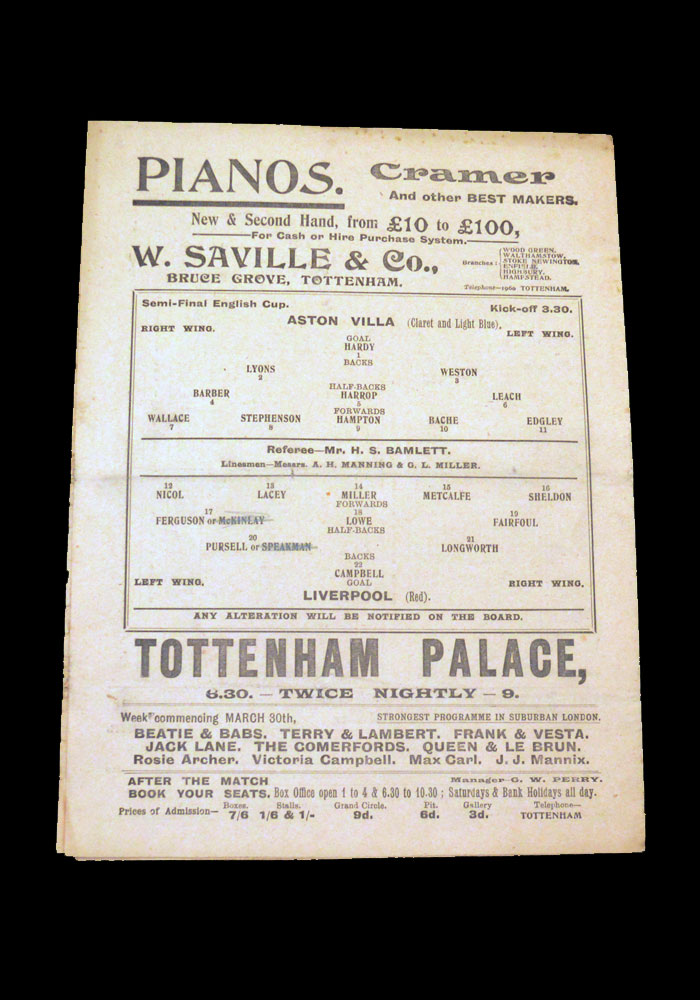
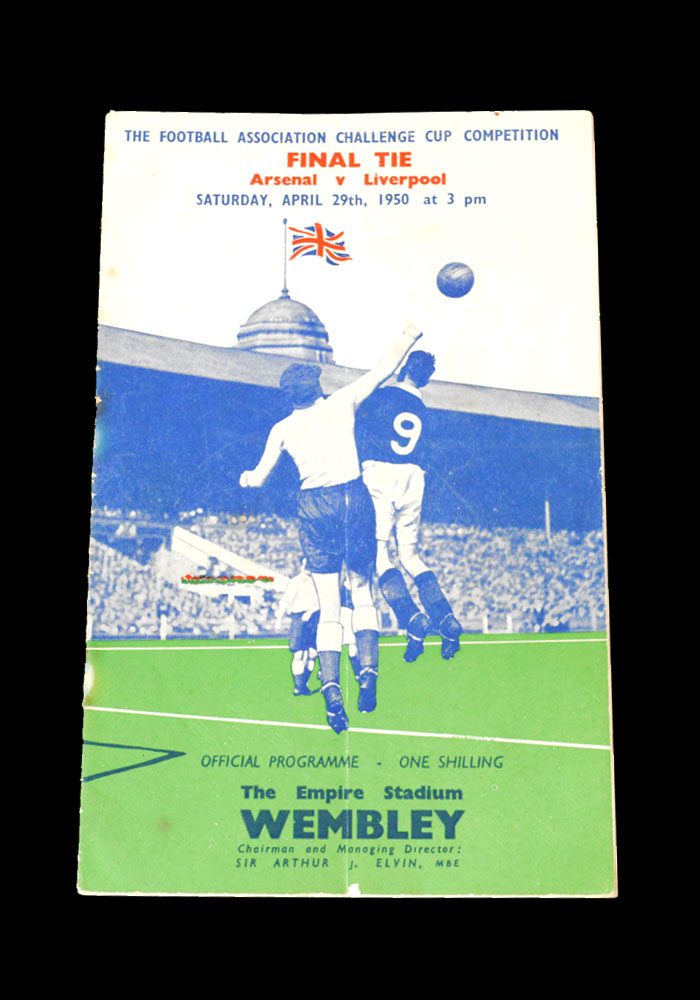
Archive examples: Aston Villa v Liverpool, 28 March 1914, and Arsenal v Liverpool, 29 April 1950. These scans illustrate the range of issues collectors research; they are not current sale listings.
Online Auctions: Choice with Added Uncertainty
Online auction platforms have transformed collecting football programmes by connecting buyers with sellers far beyond their local area. Common issues, club collections and unexpected rarities appear every day.
The range is a major advantage, as is the ability to set saved searches for particular teams, opponents, dates or seasons. However, listing quality varies considerably. Photographs may be poor, descriptions incomplete and claims of rarity exaggerated.
Study seller feedback and check whether the images show the actual item. Ask about writing, folds, missing pages, rusty staples and detached covers. If an insert or team sheet is important, request confirmation that it is present.
Do not assume that “original” means the seller has verified the edition. Reprints and later souvenir copies can be mistaken for contemporary programmes.
Keep communication polite and use the platform’s payment system. Requests to complete transactions privately may remove buyer protection and should be treated cautiously.
Fixed-Price Marketplaces: Convenience and Patience
Many online programmes are offered at fixed prices rather than auction. This removes bidding pressure and allows buyers to decide in their own time, although desirable items may sell quickly.
Fixed-price listings are useful for filling ordinary season gaps. Comparing multiple copies makes it possible to balance price and condition, particularly for widely available post-war issues.
Some platforms allow offers. A reasonable proposal can be appropriate, especially when buying several items from one seller. Extremely low offers, repeated messages and aggressive claims about value are poor etiquette.
Remember to include postage when comparing prices. Several inexpensive programmes purchased separately can become costly once individual delivery charges are added. Ask whether combined postage is available before paying.
Patience is often rewarded. A common issue listed at an excessive price is unlikely to become a sensible purchase simply because it is the only copy available that day.
Supporter Groups and Collector Communities
Club forums, social media groups and specialist societies can connect buyers directly with people who understand the subject. Members may offer duplicate programmes, share wanted lists or help identify obscure editions.
These communities are particularly useful for reserve matches, local friendlies and publications absent from mainstream catalogues. They can also provide knowledge about postponed issues, cover variations and modern print runs.
Read group rules before posting. Some communities restrict sales to certain days or require prices to be stated clearly. When responding to a seller, follow the agreed process rather than attempting to jump ahead of other interested members.
Trust is important, but sensible precautions still apply. Check references for higher-value purchases, keep a written record of the agreement and use a payment method offering suitable protection.
Contribute knowledge when possible. Communities work best when members do more than advertise their own wants.
Club Shops and Direct Sales
Club shops remain a straightforward source for current issues and may also hold older surplus stock. Some clubs sell programmes online, offer subscriptions or produce bundles after the season ends.
Buying directly can be helpful when modern print runs are limited. Ordering in advance reduces the risk of missing an edition, especially for cup ties, final matches at old grounds or special anniversaries.
Smaller and non-league clubs may rely heavily on programme income. Purchasing directly supports their publishing efforts and helps keep the printed tradition alive.
Postage and packaging quality can vary, so consider ordering several issues together. If a copy arrives damaged, contact the club politely and give it an opportunity to resolve the problem.
Charity Shops, Markets and House Clearances
General second-hand sources can produce memorable finds, although success is unpredictable. Charity shops, antiques centres, car boot sales and local markets occasionally receive collections that have not been sorted by specialists.
Prices may be low, but valuable material is not guaranteed. Many boxes contain common cup finals or ordinary home issues from well-supported clubs.
Inspect items carefully and avoid rearranging displays carelessly. If asking whether more stock is available, be courteous and accept that staff may not have time to search immediately.
House-clearance collections can contain tickets, letters and newspaper cuttings alongside programmes. Keeping related material together may preserve provenance that would be lost if everything were separated.
More issues to research and catalogue
-
Liverpool v Chelsea 27.03.1965 (FA Cup semi final)
-
Newcastle v Feyenoord 11.09.1968 1st Round 1st Leg 4-0


Archive examples: Liverpool v Chelsea, 27 March 1965, and Newcastle v Feyenoord, 11 September 1968. Note the teams, date and competition when building a wanted list.
Wanted Lists Make Every Search Easier
A detailed wanted list prevents duplicates and helps dealers understand exactly what you need. Include the season, date, home club, away club and competition where possible.
Divide the list into priorities. Essential gaps, desirable upgrades and speculative interests should not all compete for the same budget. Record condition requirements if you will only accept copies above a certain standard.
A digital version is convenient at fairs and can be updated immediately after a purchase. Photographs are useful when searching for a particular cover variant.
Sharing a concise list with trusted contacts can turn several people into additional pairs of eyes.
Buy Carefully and Enjoy the Search
There is no single best source for programmes. Fairs provide conversation and hands-on browsing, dealers offer expertise, auctions bring major collections to market and online platforms make distant stock accessible.
Successful buying depends on preparation. Research editions, examine condition, include fees and postage, and decide what an item is worth to your collection before paying.
Good etiquette matters too. Prompt payment, careful handling and respectful communication help maintain the relationships on which the hobby depends.
Ultimately, collecting football programmes is as much about the search as ownership. Whether the next issue emerges from a dealer’s catalogue, an auction lot or a dusty market box, the moment of discovery adds another story to the programme itself.