

Start collecting football programmes by choosing a theme, setting a comfortable budget and learning to check condition before buying. A small, organised collection of matches that interest you is a better starting point than a large box you do not know how to sort.
Programmes preserve the details around a match: team lists, advertisements, photographs and the expectations of the day. Whether you follow one club, enjoy a particular era or want reminders of games you attended, this guide explains the first steps and connects you with useful examples from the 10 Footballs archive.
Your first five collecting steps
- Pick one club, season, competition or personal theme.
- Set a budget that includes postage and storage, not just purchase prices.
- Check the fixture, edition, condition and completeness before buying.
- Record what you own so you can recognise gaps and duplicates.
- Store the programmes safely and choose your next small collecting goal.
Choose a focus before your first purchase
A clear focus makes the hobby easier to organise. You might collect your club’s home programmes for one season, matches at grounds you have visited, international fixtures or a particular cup competition. A player or family connection can be just as useful a starting point as a famous final.
Write a simple goal such as “one programme from each ground I have visited” or “the home matches from my first season as a supporter”. Avoid treating every interesting listing as a missing piece. Our guide to building a one-club collection explains how a focused set can develop over time.
The first gallery shows how varied a collecting theme can be. The archive identifies these scans as Newcastle v Feyenoord in 1968, Arsenal v Anderlecht in 1953, Manchester United v Portsmouth in 1947 and Spain v Switzerland in 1941. They are examples to explore, not a recommended shopping list or evidence of current prices.
-

Newcastle v Feyenoord 11.09.1968 1st Round 1st Leg 4-0
-
Arsenal v Anderlecht 21.10.1953 (Friendly)
-
Man Utd v Portsmouth 25.12.1947
-
Spain v Switzerland 28.12.1941


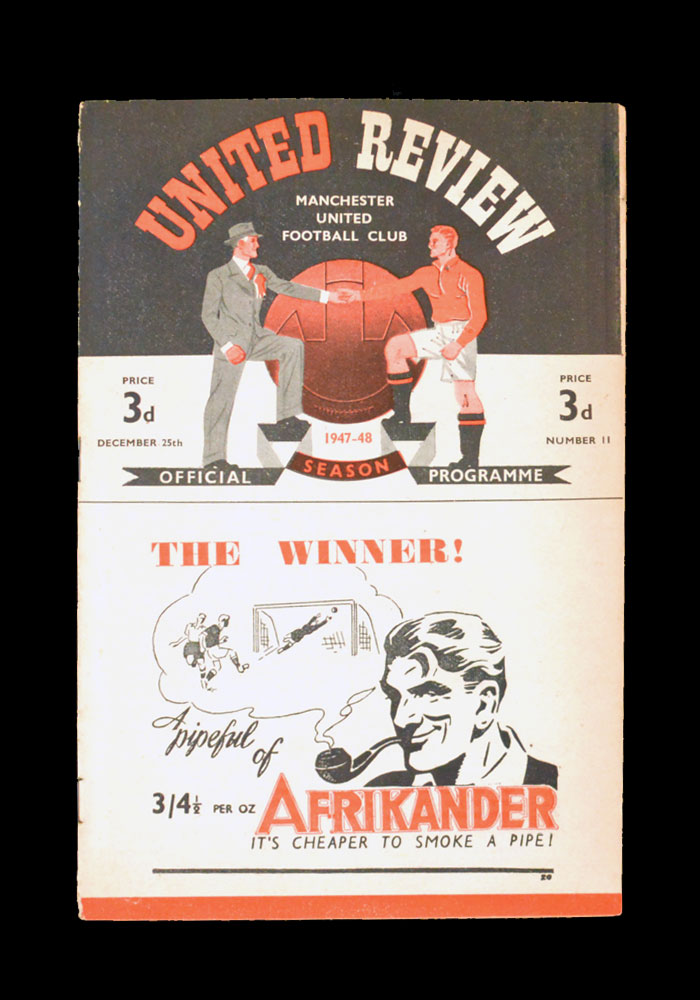

Compare the fixture information and publication dates. A club collection, a European-match collection and an international collection would organise these examples differently. Use the programme archive to explore eras and seasons before deciding what appeals to you.
Learn condition, completeness and originality
Read a seller’s description alongside the photographs. Check the front and back covers, spine, staples and centre pages. Ask whether pages, tokens, inserts or team sheets are missing, and whether there are repairs, stains, tears or heavy folds.
Writing is worth recording rather than overlooking. A handwritten score, team change or autograph can be part of an item’s story, but it is not automatically evidence of who attended the match or when the writing was added. Note what you can see and keep any unverified explanation separate.
Original programmes and later reproductions should be clearly distinguished. A reprint may suit a display or reference collection, but it should not be bought or described as an original. Our guide to spotting a fake or forged football programme provides a more detailed starting point.
For an expensive or unfamiliar issue, pause and seek a specialist opinion. Do not assume that an old-looking cover, a famous fixture or a signature guarantees rarity or authenticity.
Where to look for football programmes
Matchdays and club shops are a starting point for current programmes. Specialist dealers, programme fairs, auctions and online marketplaces offer different ways to look for older issues. Fan groups, swaps, charity shops and car boot sales can also form part of the search.
Choose the source to suit the item. For a common programme, clear photographs and a straightforward description may answer your questions. For an unusual edition or a potentially valuable original, look for a fuller description, reliable provenance where available and an opportunity to ask questions before committing.
When buying online, check postage, packaging and the seller’s stated returns arrangements. Ask for additional images when the condition is unclear. A mixed bundle is not automatically good value: count how many programmes actually fit your collection.
Set a budget and compare like-for-like examples
There is no single starting budget that suits every collection. Choose an amount you are comfortable spending and leave room for protective materials and delivery. A modest theme can be built gradually; there is no need to stretch your budget because a seller describes something as a must-have.
Completed sales can provide useful reference points, but compare the same fixture and edition in similar condition. An asking price is not a completed sale, and an old auction result is not a guaranteed current valuation. Our Liverpool rarity-and-value guide illustrates why those distinctions matter.
Keep your maximum bid separate from the excitement of an auction. Include any buyer’s fees and delivery charges before deciding what you can afford. When an item exceeds that limit, record it as a future research target rather than an immediate purchase.
Catalogue what you own
A notebook or simple spreadsheet is enough to begin. Record the date, teams, competition, venue, edition, condition, missing items and purchase cost. Add a photograph or scan reference, plus a storage location so you can find the original without handling every programme.
Keep historical notes distinct from the item’s condition. “FA Cup semi-final” identifies the occasion; “score written in pencil” describes your copy. That separation makes it easier to compare duplicates and explain precisely what you are offering in a swap.
The next gallery supplies a useful cataloguing exercise. Its archive records identify a Great Britain v Europe programme, Wolves v Stoke, Derby v Birmingham and an issue listing two Sheffield fixtures. The last example is a reminder to check whether one publication covers more than one match.
-
GB v Europe 10.05.1947
-
Wolves v Stoke 01.03.1947
-
Derby v Birmingham 23.03.1946 (FA Cup Semi Final 1st Round)
-
Sheff Wed v Stoke 13.10.1945 | Sheff Utd v Barnsley 27.10.1945


Try recording each fixture before deciding how to file it. A programme’s printed details, the match actually played and any later collector’s annotation are related information, but they are not necessarily identical.
Store and handle your collection carefully
Use clean, dry hands and support fragile paper when handling it. Keep food and drinks away from the collection. Avoid adhesive repairs, tight rubber bands, lamination or improvised cleaning: a programme that needs conservation deserves specialist advice rather than a quick cosmetic fix.
Choose supportive storage made for paper collections, such as acid- and lignin-free folders or boxes. Suitable protective sleeves can help, but their material and fit matter. The Library of Congress guidance on caring for paper explains handling and protective enclosures in more detail.
Store programmes away from direct sunlight, damp and large temperature changes. Avoid overfilled folders or pressure that distorts the spine. For practical advice specific to the collection, read how to look after your football programmes.
Trade duplicates and share knowledge
Duplicates can become useful swaps once you have checked their condition and edition. Describe faults clearly, photograph the actual copy and agree what each person is sending. A tidy record helps prevent accidental repeat purchases and misunderstandings.
Ask questions in collector communities and credit information that helps identify an issue. Sharing a researched fixture note or a clear scan can be more useful than simply describing a programme as rare. Your collection will develop through what you learn as well as what you buy.
Make your next collecting goal a small one
Begin with the five steps near the top of this guide, then review your first few purchases. Are you enjoying the chosen theme? Can you identify and find every item? Are you staying within the budget you set?
Choose the next manageable goal: fill one gap, research one unfamiliar edition or organise one season. Explore the archive for ideas, keep accurate notes and let your interests guide the pace. A worthwhile collection is one you understand and enjoy, not simply the largest pile of programmes.