
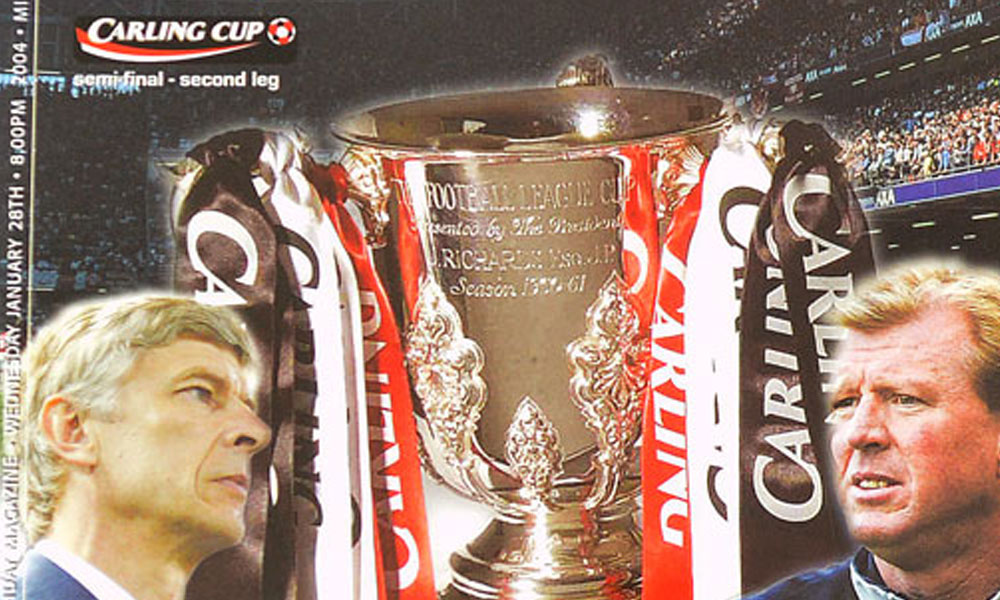
A football programme is normally a record of a match that took place. It contains the date, opposition, expected teams and stories surrounding a fixture, allowing future readers to return to one particular afternoon or evening.
Sometimes, however, the programme survives while the match does not. Snow, fog, flooding, crowd trouble, floodlight failure and exceptional national events have all caused fixtures to be postponed or abandoned. Other games have been played behind closed doors, leaving publications connected to matches that supporters could not attend.
These unusual issues occupy a fascinating corner of football history. They record plans that changed, matches that were never completed and occasions experienced very differently from an ordinary game.
Why Programmes Are Printed Before the Match
Producing a programme requires preparation. Editorial material must be written, advertisements arranged, pages designed and copies printed before supporters arrive at the ground. For an ordinary league fixture, much of this work may be completed several days in advance.
That schedule creates the possibility of a programme being produced for a game that is later postponed. A sudden freeze, overnight snowfall or waterlogged pitch can defeat even careful planning. Once thousands of copies have been printed, the publication already exists regardless of whether the referee starts the match.
Some copies may have reached sellers, sponsors or club officials before the postponement was announced. Others may remain in storage and appear later through club shops, auctions or private collections. The circumstances of distribution can make a considerable difference to rarity.
-

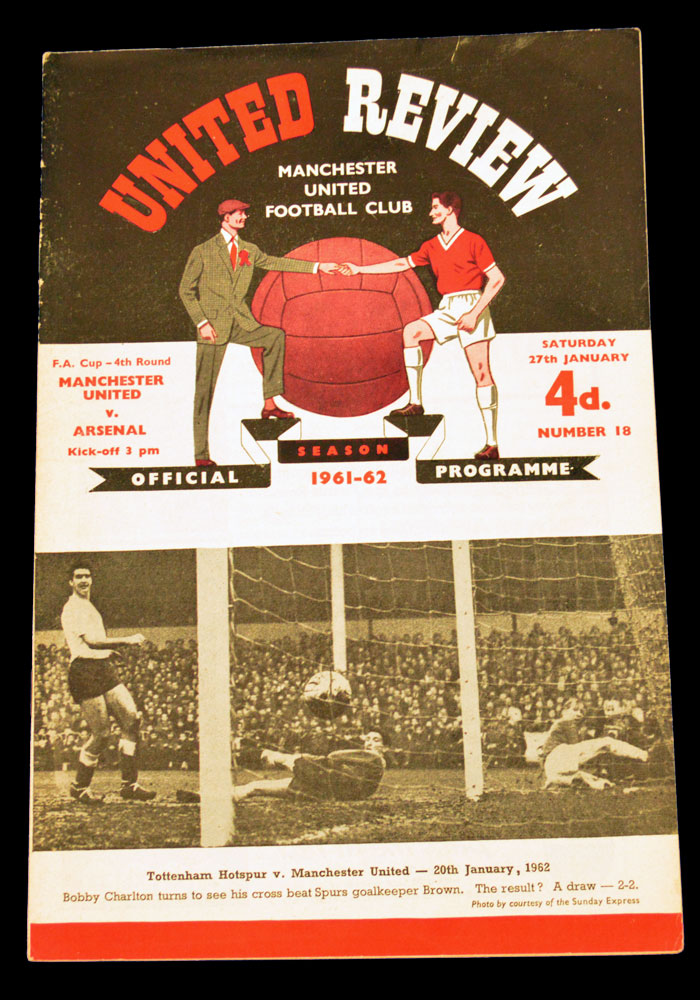
Arsenal v Manchester United 27.01.1962 | Postponed to 31.01 | FA Cup 4th Round
-
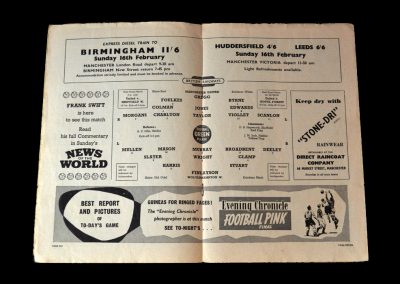
Man Utd v Wolves 08.02.1958 - postponed
-

QPR v Arsenal 30.11.1976 - postponed
-
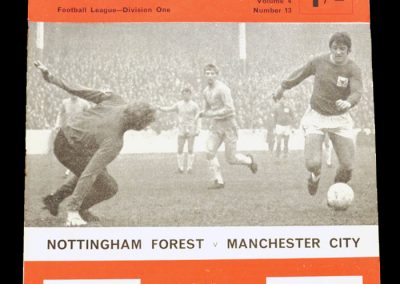
Notts Forest v Man City 28.12.1968 (postponed)
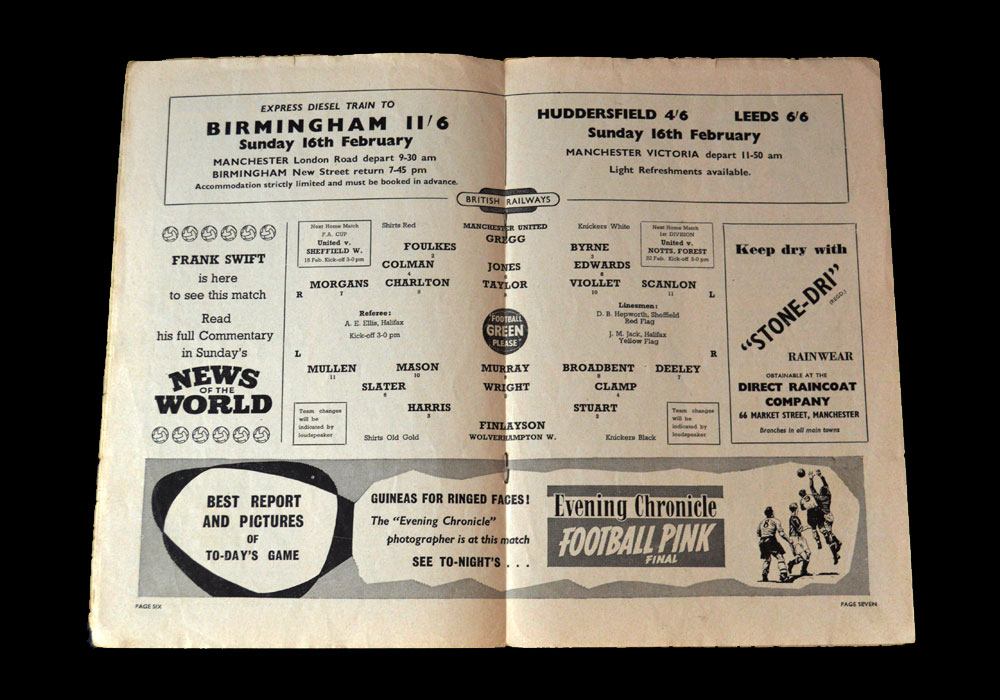
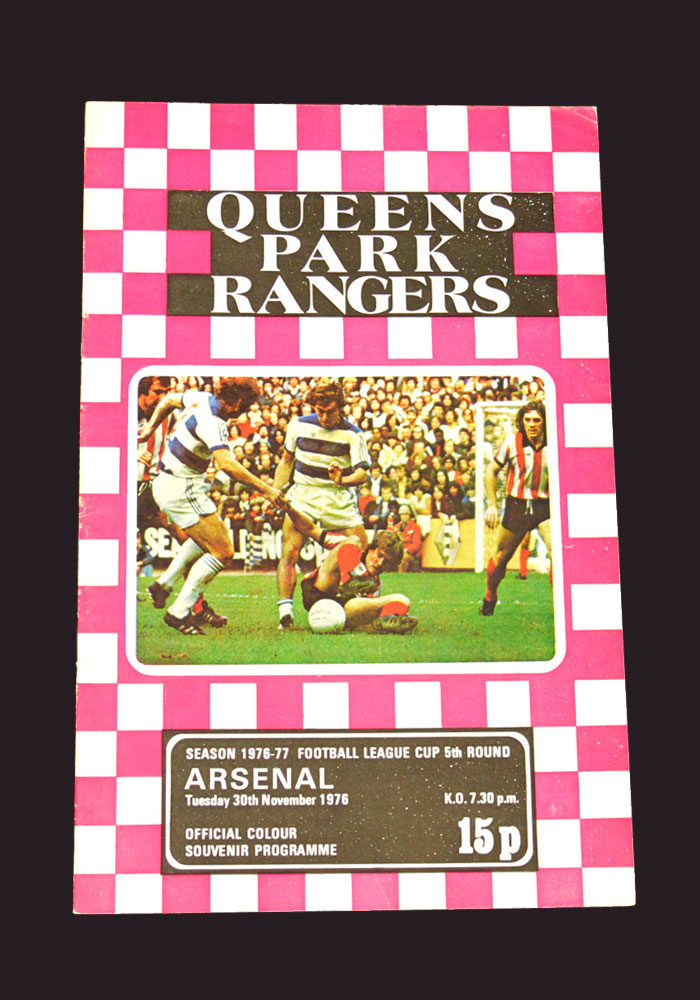
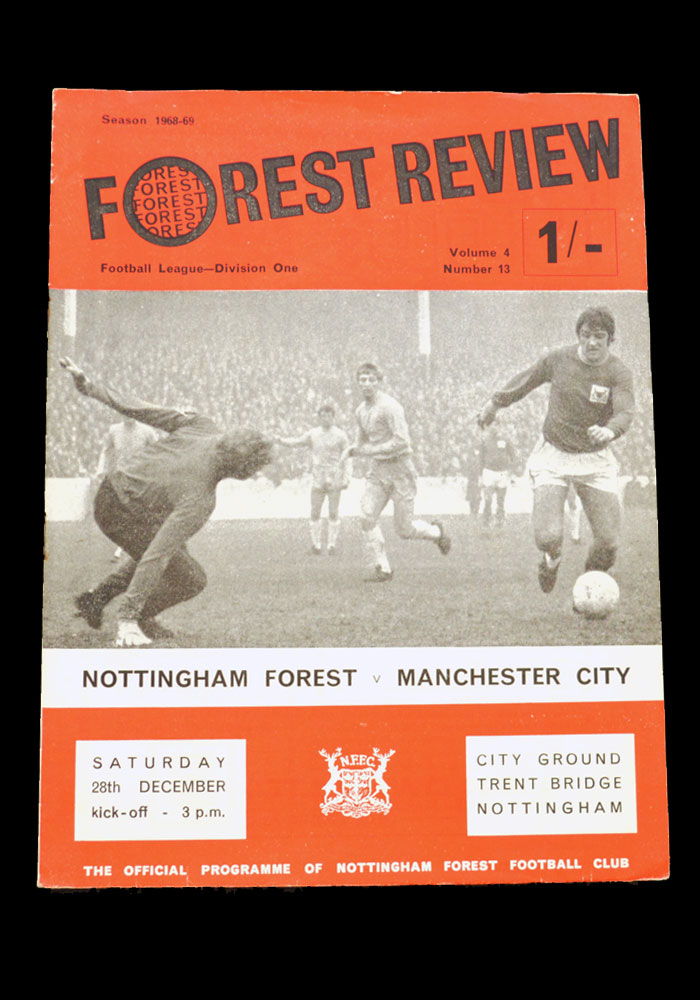
Postponements and the Fixture That Never Started
Bad weather has caused countless postponements across British football. Before widespread undersoil heating and modern drainage, winter fixture lists were particularly vulnerable to frozen or saturated pitches.
A postponed-match programme captures the fixture as it was expected to happen. Its cover displays the original date, while its notes discuss form, injuries and league positions that may have changed by the time the teams eventually met.
When the match is rearranged, the club must decide whether to produce a completely new edition. Some create another programme with the revised date. Others reuse the original, perhaps adding a new cover, loose insert or updated team sheet.
For collectors, this can create several distinct versions connected to one fixture. Establishing exactly what was sold on each date becomes part of the challenge. Two apparently similar old football programmes may have important differences in covers, overprinting, inserts or internal references.
When an Original Programme Is Reused
Reusing programmes reduced waste and avoided the cost of producing an entirely new edition. However, it could also cause confusion. An original programme might be sold at the rearranged match with no alteration, even though the printed information was months out of date.
In other cases, clubs added a small insert explaining the new circumstances. These loose sheets are easily lost, making complete examples more difficult to find. A sticker, stamp or overprinted date could also transform surplus stock into a programme for the revised fixture.
Collectors should examine such items carefully. A handwritten change may have been made by a supporter, whereas an official alteration was applied by the club or printer. Contemporary records, provenance and comparison with recognised copies can help identify the correct version.
An original programme accompanied by its official update provides a particularly satisfying record of the complete story.
Abandoned Matches Tell a Different Story
An abandoned match begins but does not reach its normal conclusion. The cause might be deteriorating weather, a waterlogged pitch, failing floodlights, crowd disorder or an emergency inside the ground.
The programme becomes evidence of a match that existed in an unusual form. Supporters bought it, entered the stadium and watched at least part of the game, yet the result may have been declared void and the fixture played again.
This creates an intriguing pair for collecting: the programme from the abandonment and the one issued for the replayed match. Together they show how the contest changed between the two dates. Team selections may differ, managers may revise their tactics and the rearranged fixture may produce an entirely different score.
Match annotations add further character. A supporter may have recorded a goal that disappeared from official records when the game was abandoned. Such notes preserve the lived experience of an event that conventional tables may barely acknowledge.
The Effect of Floodlight Failures
Floodlight problems became a distinctive source of abandoned evening matches as football embraced more games under artificial light. A sudden failure could leave players and spectators waiting in darkness while officials decided whether play could continue.
Programmes from these fixtures can attract interest because the failure forms part of the occasion’s story. Suspicion sometimes surrounded badly timed outages, particularly when one team appeared to benefit, although collectors should distinguish documented facts from terrace folklore.
If the match was resumed or replayed, a second programme may have been produced. Occasionally the club reused material from the first edition, creating closely related variants that require careful comparison.
The value lies not only in scarcity but in the strange interruption of the expected matchday narrative. The programme promises 90 minutes of football; the event itself delivers something unresolved.
Games Played Behind Closed Doors
Behind-closed-doors matches occupy another unusual category. They may result from disciplinary action, safety concerns, public emergencies or restrictions affecting mass gatherings.
With no ordinary crowd to buy a souvenir, programme production may be reduced, altered or cancelled altogether. Some clubs still print copies for officials, media representatives, sponsors and players. Others issue a digital programme or produce a publication in numbers far below a normal matchday run.
Physical programmes from genuinely closed fixtures can therefore be scarce. However, low attendance and low print numbers do not automatically guarantee high value. Collector demand still depends on the clubs involved, the competition, the importance of the match and the story surrounding it.
Provenance is especially important when an issue was never offered through normal sales channels. A credible connection to the club, press box or participating officials can help establish how a copy entered circulation.
The Empty Stadium Era
The widespread disruption of 2020 and 2021 created an extraordinary period in football history. Matches continued in empty or nearly empty stadiums, with crowd noise replaced by echoes, instructions from the touchline and, in some broadcasts, artificial sound.
Programme traditions varied. Some clubs maintained printed editions and sold them remotely, allowing supporters to continue season collections from home. Others moved to digital-only publications or reduced their output.
These programmes document far more than individual fixtures. Covers, editorial notes and photographs reflect a game adapting to public restrictions, financial uncertainty and separation from its supporters.
Because many copies were purchased online and delivered directly to collectors, surviving examples may remain in excellent condition. Their long-term interest is likely to depend on completeness, print numbers and the significance of the match represented.
Why These Oddities Appeal to Collectors
Collectors are often drawn to exceptions. A standard programme records what happened; a postponed or abandoned issue also records what was supposed to happen.
These publications invite questions. Was the programme sold? How many copies escaped disposal? Was another edition printed? Did a famous player appear in the abandoned game but miss the rearranged fixture?
They can also fill unusual gaps in a collection. Someone assembling every programme from a club’s season may need both the postponed and rearranged editions. A collector focused on one player might seek an abandoned match because it contains an appearance ignored by standard statistics.
Rarity must still be researched rather than assumed. Sellers sometimes describe every postponed programme as scarce, even when large quantities of unused stock survived.
Checking Authenticity and Completeness
Before buying, confirm the original fixture date and what happened to the match. Compare the programme with the edition from the rearranged game and look for differences in price, print, pagination and team information.
Check whether an official insert or team sheet should be present. Inspect stamps and overprinting closely, and be cautious about unsupported claims of extremely limited production.
Condition remains important, although signs of matchday use can enhance the story. A score written beside an abandoned goal or a note about snow may connect the item directly to the occasion.
Programmes That Preserve Football’s Unwritten Results
Football history is not made only from completed matches and official scorelines. It also includes frozen pitches, darkened floodlights, empty stands and fixtures that disappeared from the record.
The programmes connected to these events preserve the expectation before plans changed. They show how clubs responded, how supporters recorded the moment and how the sport carried on.
For collectors of old football programmes, these issues offer something beyond conventional rarity. They hold the story of a matchday disrupted, delayed or denied—and sometimes the most memorable programme is the one for the game that never happened.