

A Liverpool programme collection can tell the club’s story through individual matchdays: a changing Anfield, a first Wembley triumph, a European comeback or a final far from home. The interest lies not only in the cover, but in the team lists, photographs, advertisements and expectations recorded before anyone knew the result.
This guide follows landmark matches and collecting themes rather than ranking programmes by price. For rarity, condition and documented auction examples, use our companion guide to the most collectable and valuable Liverpool programmes.
Early Anfield: begin with the match, not the price
Early programmes offer a way into football history that a results list cannot provide. Look beyond a famous club name and ask what the publication tells you about the matchday: how the teams were described, which local businesses advertised and what supporters were expected to read before kick-off.
Our programme archive before 1900 provides a starting point for exploring the earliest material. The 1922/23 collection offers a later comparison. Treat each scan as a document to investigate, rather than assuming that every old programme is a final, a souvenir edition or a valuable rarity.
For a Liverpool-focused collection, an early home issue can sit alongside a later programme from the same ground. Comparing the two makes changes in design, advertising and the presentation of the club easier to notice. Record the fixture and date before adding your own notes about its historical significance.
The Kop-opening souvenir: Liverpool v Bury, 1928
The souvenir programme for Liverpool v Bury on 25 August 1928 marks the opening of the completed Spion Kop new stand. It is a stadium-history document as well as a record of a football fixture.
A surviving example described in Graham Budd’s programme catalogue has twelve pages, a gilt-printed cover and a red ribbon in the spine, with photographs of the stand and ground. Those details explain why the issue belongs in a collection about Anfield’s development, rather than simply in a run of league fixtures.
When researching a commemorative programme, distinguish the occasion it celebrates from the match being played. A useful catalogue entry records both. That approach also works for programmes connected with ground openings, stand extensions and farewell matches.
Wembley, 1965: the first FA Cup victory
The final against Leeds United on 1 May 1965 marks Liverpool’s first FA Cup win. As the club’s FA Cup history records, Liverpool won 2–1 after extra time, with Ian St John scoring the decisive goal.
For a collector, the programme is a natural centrepiece for a domestic-cup theme. It can be placed alongside programmes from earlier rounds, or compared with a later final to follow changes in Wembley’s presentation of the occasion.
A collection does not have to tell only a story of victories. Liverpool’s 1977 FA Cup final against Manchester United also belongs in the club’s history. Including setbacks alongside successes gives a season collection more context than selecting trophies alone.
European nights at Anfield
Inter Milan, 4 May 1965
Three days after the FA Cup final, Liverpool beat Inter Milan 3–1 at Anfield in the first leg of their European Cup semi-final. The club’s account of that evening describes the FA Cup being shown to the crowd before the match. Inter subsequently won the tie, so the Anfield programme captures a celebrated performance rather than the completion of a successful European campaign.
Pairing the Wembley and Inter programmes creates a tightly focused collecting theme: two matches within a few days, showing Liverpool competing on domestic and European stages. A short note beside each issue can explain the connection without turning the collection into a general history of the entire season.
Saint-Étienne, 16 March 1977
The 3–1 victory over Saint-Étienne in the European Cup quarter-final second leg is another landmark Anfield occasion. Liverpool’s retrospective of the tie places it on the route to the club’s first European Cup.
Here the programme can form part of a journey rather than an isolated purchase. Collecting selected rounds leading to a final lets the reader follow a campaign through contemporary publications. Keep the leg, venue and competition clear in your notes: a home programme, an away issue and the final programme are different documents even when they belong to the same story.
From Rome to Istanbul: a European-final collection
Final programmes offer a manageable way to organise a Liverpool collection. The club’s European Cup and Champions League history supplies the context for these milestones:
- 1977: Borussia Mönchengladbach in Rome, Liverpool’s first European Cup victory.
- 1978: Club Brugge at Wembley, when Liverpool retained the trophy.
- 1981: Real Madrid in Paris, another European Cup success.
- 1984: Roma in Rome, a final decided by a penalty shoot-out.
- 2005: AC Milan in Istanbul, remembered for Liverpool’s comeback and victory on penalties.
These are suggested milestones, not a claim that every edition is scarce or expensive. A match-history collection can be rewarding because of the connections between its programmes, irrespective of whether individual copies command high auction prices.
Read the four programmes in this gallery
The existing scans below bring together European finals and domestic cup matches. The collection records identify them, in gallery order, as Liverpool v Club Brugge on 10 May 1978; Everton v Liverpool in the FA Cup semi-final on 27 March 1971; Manchester United v Liverpool in the FA Cup final on 21 May 1977; and Liverpool v Roma on 30 May 1984.
-

Liverpool v Bruges 10.05.1978 (European Cup FInal) (DT was there)
-
Everton v Liverpool 27.03.1971 - FA Cup Semi Final
-
Man Utd v Liverpool 21.05.1977 - FA Cup Final
-
Liverpool v Roma 30.05.1984 - Europen Cup Final
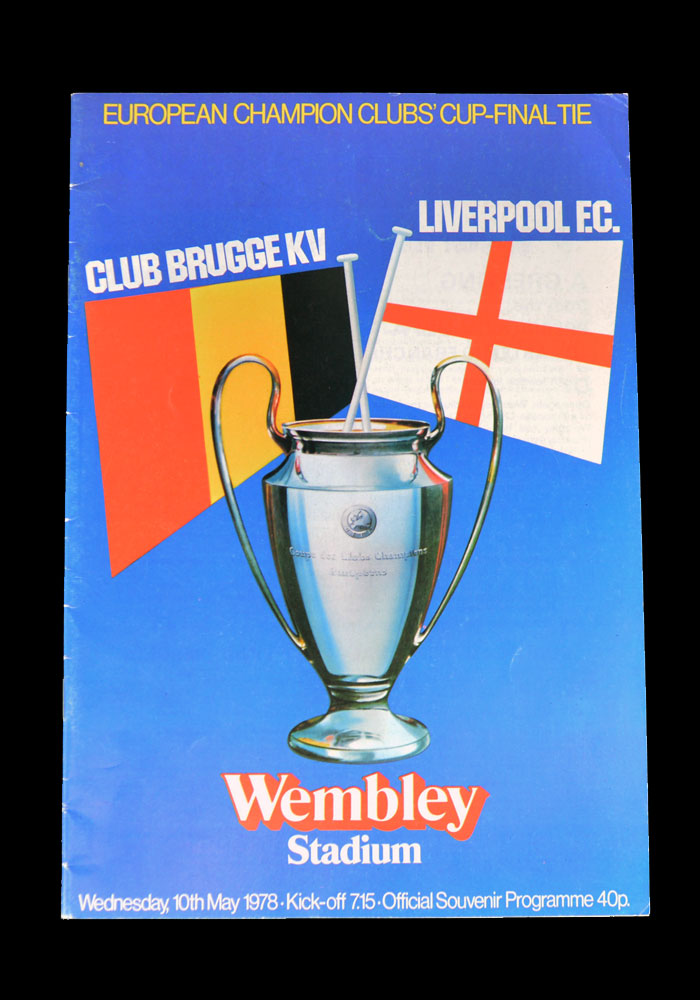
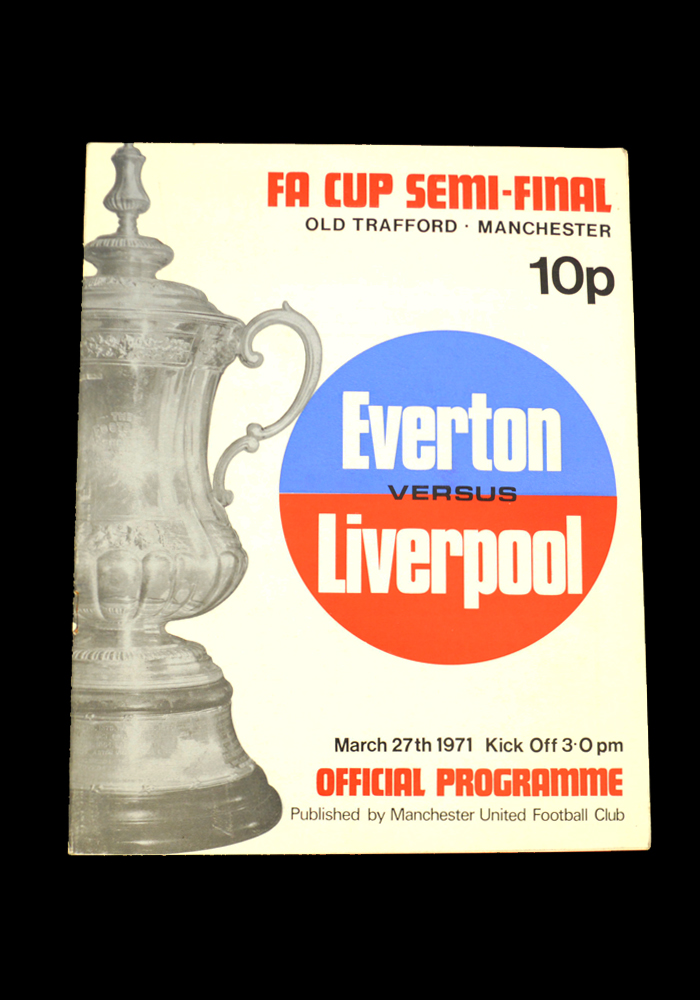
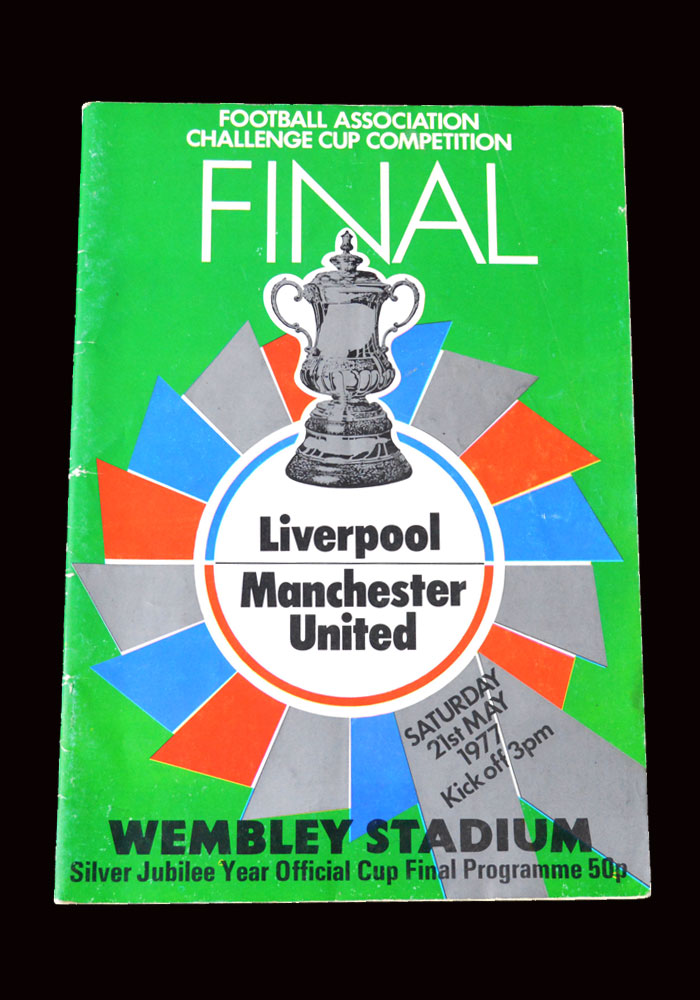
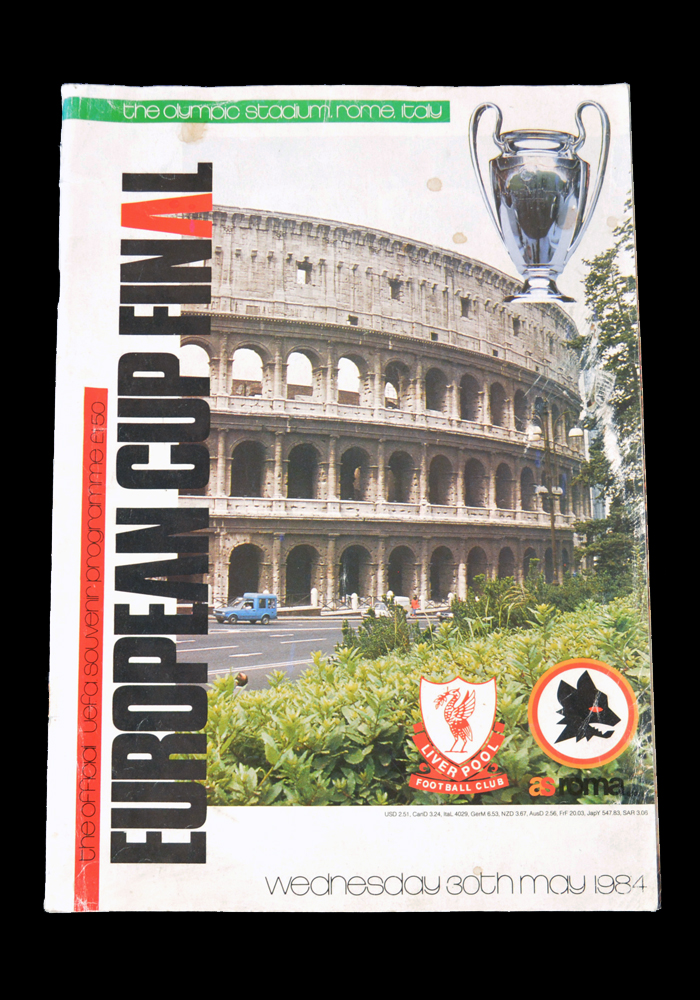
Use the fixture and date to place each programme within its season. The two European finals illustrate a trophy-based theme; the semi-final and the 1977 Wembley issue show how a wider cup-history collection can include the route to a final and matches that did not end in victory. The gallery is a selection from the archive, not an illustration of every match discussed above.
Choose a collecting theme you can follow
Start with a question your collection will answer. How did Anfield change? What did one European campaign look like before each match? Which programmes connect with the games your family remembers? A narrow theme helps you decide which issues belong together.
Possible starting points include one season, European home ties, Wembley appearances or matches you attended. You can broaden the collection later without losing its original purpose. Our guide to building a one-club programme collection develops that approach.
Keep a simple record of the fixture, date, competition, venue and edition, followed by a separate note explaining why the item interests you. Identify reprints honestly and avoid assuming that a handwritten score or autograph belongs to matchday unless you have evidence.
Keep Liverpool’s matchday story together
Browse the programme archive to follow the collection by era and season. New collectors can use our beginner’s collecting guide for the practical first steps, while the programme-care guide covers looking after the paper itself.
The aim is not simply to assemble a list of famous matches. It is to make the connections visible: between a programme and its stadium, between a semi-final and a final, or between a supporter’s memory and the printed record of the day. Those connections give a Liverpool collection its own story.