
Football programmes have always provided far more than the basic details of a fixture. Although team line-ups, player profiles and notes from the manager remain familiar features, publishers have continually experimented with additions designed to inform, entertain and reward supporters.
Across the decades, programmes have contained posters, stickers, cards, vouchers, fixture charts and detachable supplements. Modern editions have extended the idea through QR codes linking printed pages to videos, interviews and digital content. For anyone collecting football programmes, these extras can add interest, rarity and value—but only when they remain present and in good condition.
When the Team Sheet Was the Main Attraction
Early football programmes were often modest publications. Some consisted of a folded sheet containing the competing teams, officials, kick-off time and brief club notices. Their purpose was primarily practical: to help spectators identify the players and follow the match.
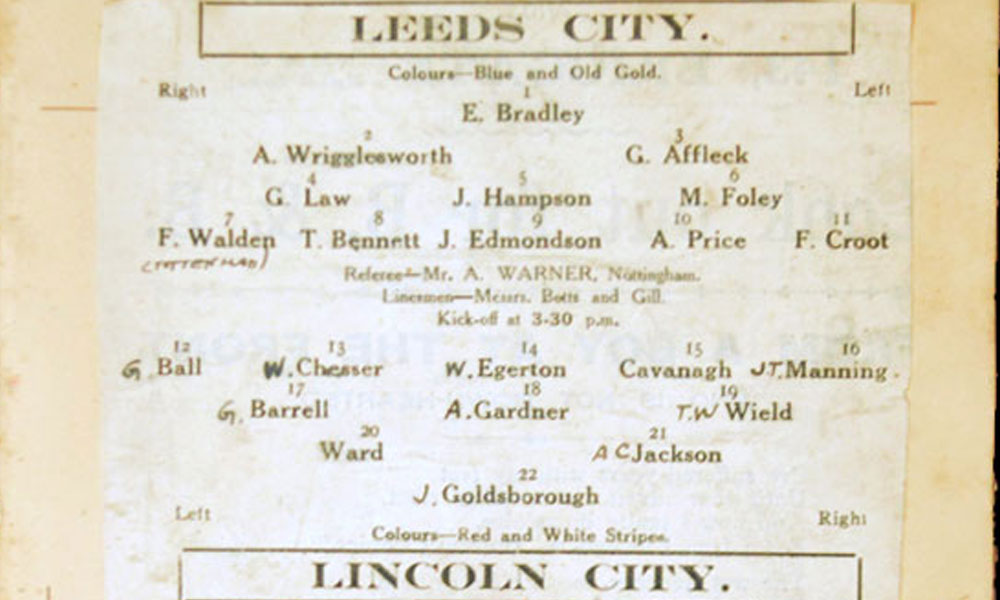
The printed line-up was not always reliable. Late team changes meant supporters frequently altered programmes by hand, crossing out absent players and writing replacements beside them. Far from necessarily ruining an old issue, these contemporary annotations can capture how the programme was used on the day.
Separate team sheets later became common at some fixtures, particularly where final selections were confirmed after the main programme had gone to print. When an original sheet survives alongside its correct programme, it can make the item more complete and desirable.
Collectors should check that a loose team sheet genuinely belongs to the match. Paper type, typography, sponsor details and provenance can all help distinguish an original insert from a later copy.
-
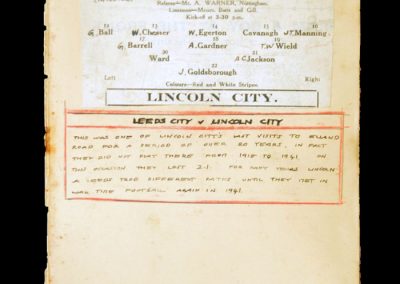
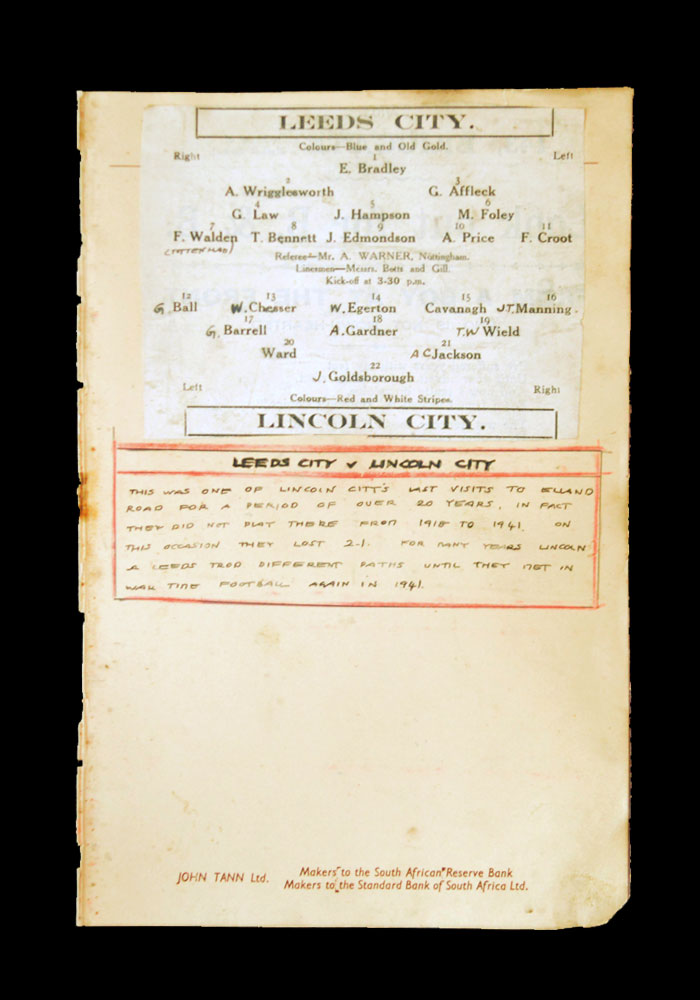
Leeds City v Lincoln 25.09.1915 (Teamsheet)
-

Leyton Orient v Middlesbrough 31.10.1959 (Teamsheet and fan comment)
-
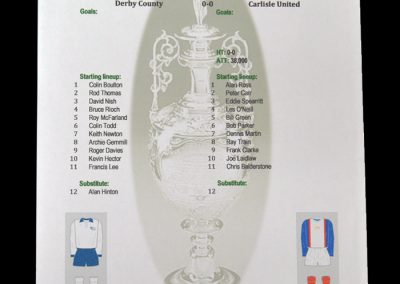
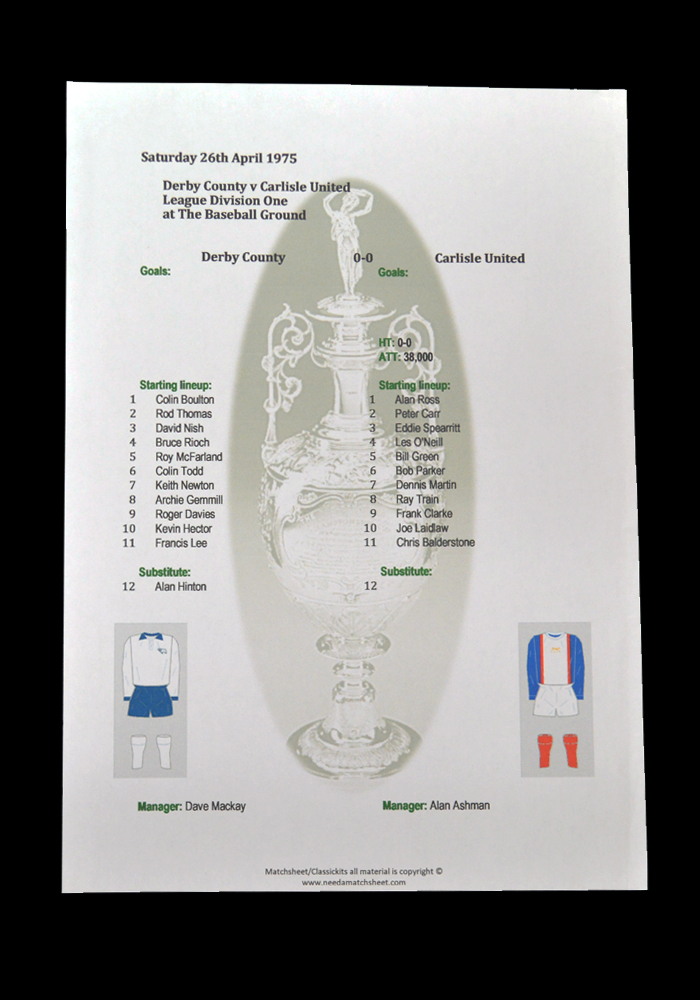
Derby v Carlisle 26.04.1975 (Teamsheet)
-
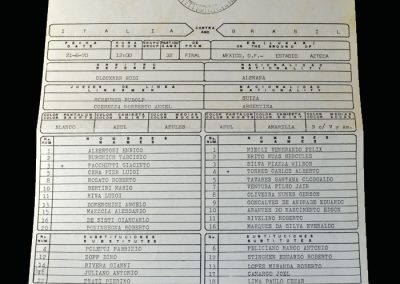
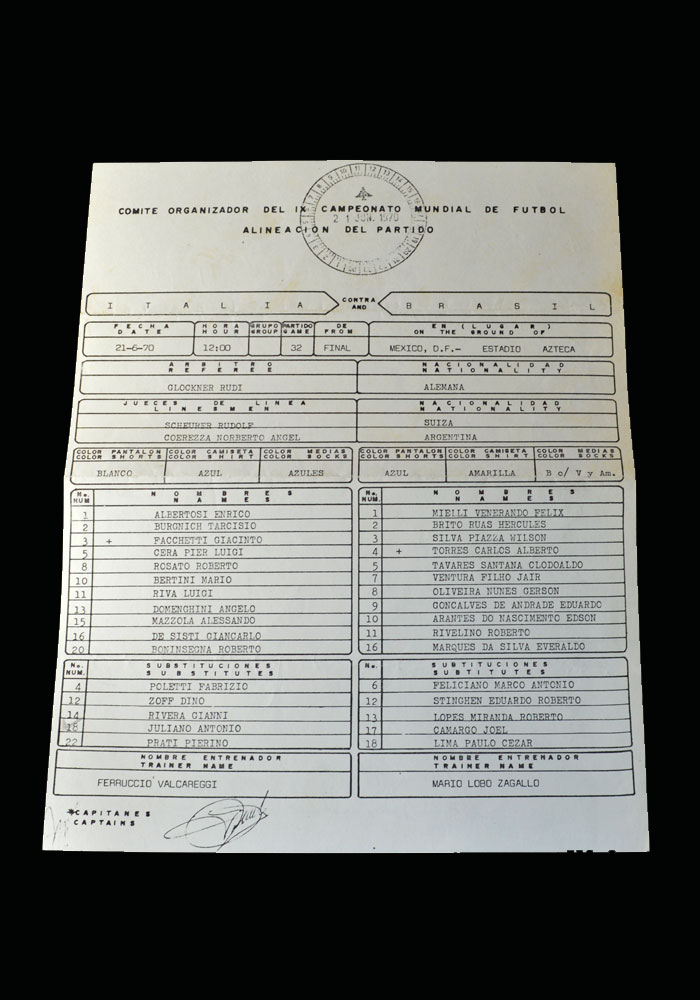
Brazil v Italy 21.06.1970 - World Cup 1970 Final Team Sheets

Fixture Lists and Fold-Out Charts
Fixture charts gave supporters a way to follow an entire season rather than a single afternoon. They might include spaces for results, scorers, attendances or league positions, turning the programme into a record that could be updated week by week.
Fold-out league tables and wall charts were especially appealing because they extended beyond the normal page format. Some were designed to be removed and displayed at home, which explains why surviving programmes may have an empty centre section or damaged staples.
An unused chart can be particularly attractive to collectors. However, a chart completed neatly during the season also has historical character. It shows how a supporter interacted with the game before results, statistics and tables became instantly available online.
The most important consideration is whether the chart remains attached or accompanies the programme as originally issued. A rare football programme advertised as complete should contain every integral supplement.
Posters Made for Bedroom Walls
Player and team posters became an important programme feature as football publishing grew more colourful and youth-focused. Centre-page portraits of star players could be removed and pinned to bedroom walls, while team photographs commemorated promotions, cup runs and successful seasons.
Because posters were created to be taken out, complete examples can be much harder to find than the programme itself. Staples may have been opened, pages carefully detached or images cut along printed lines.
Collectors should inspect the centre spread closely. Missing staples, irregular page numbering and small remnants of paper can indicate that a poster has been removed. A loose poster paired with the right issue may still be appealing, although an originally attached example will generally be regarded as more complete.
Subject matter also affects interest. Posters featuring legendary players, famous teams or early appearances can be especially desirable, sometimes making an otherwise ordinary league programme much more collectable.
The Rise of Football Stickers
Football stickers became closely associated with albums, but programmes also used them as promotional extras. Some contained individual player stickers, club badges or sheets connected to a wider collection.
Their removable nature makes them challenging to find intact. Children understandably peeled them out, traded them or placed them in albums. An issue retaining its unused sticker sheet can therefore be considerably scarcer than one with the relevant page removed.
Condition needs careful assessment. Old adhesive can dry, discolour or cause stickers to lift from their backing. Attempting to press or glue them back into place may cause further damage and reduce confidence in their originality.
When collecting football programmes containing stickers, confirm exactly what was included at publication. Comparing multiple copies or consulting specialist knowledge can help establish whether an apparently missing item was supplied with every programme or only selected versions.
Cards, Tokens and Collectable Series
Trading cards and player cards have appeared in numerous formats. Some were bound into the programme, while others were supplied loose or designed to be cut out. A series spread across a season encouraged supporters to buy every home issue to complete a set.
Programmes have also included tokens that could be collected and exchanged for photographs, souvenirs or entry into competitions. As these pieces often served a purpose outside the programme, many were removed.
An uncut page of cards or tokens may interest both programme collectors and card specialists. Complete season sets can be particularly satisfying because they preserve the original publishing concept rather than isolating one desirable player.
However, collectors should distinguish between a genuinely rare insert and an ordinary feature surviving in many copies. A famous player can create demand, but scarcity, condition and completeness remain equally important.
Vouchers, Coupons and Matchday Offers
Discount vouchers, competition entries and retail offers provide a fascinating record of football’s commercial development. Programmes have contained coupons for club shops, travel, food, photography and sponsor promotions.
These additions may appear insignificant, yet they help place a match within its wider social and commercial setting. A competition form asking supporters to predict the score, for example, reveals how clubs encouraged interaction long before mobile apps.
Unused vouchers tend to support completeness, while clipped coupons create a clear condition issue. Nevertheless, a used programme can still have historical appeal, particularly if the offer was closely connected to a landmark match or club campaign.
Loose promotional inserts are easily separated from their original programmes. Provenance becomes important when sellers claim that a leaflet, voucher or card was distributed at a particular fixture.
Supplements for Finals and Special Occasions
Cup finals, testimonials, European ties and anniversary matches have often inspired additional publications. These might include souvenir booklets, colour photographs, commemorative cards or sponsor-produced guides.
A programme accompanied by all its original supplements can form a particularly attractive matchday set. The challenge lies in establishing which items were officially included, sold separately or handed out elsewhere around the stadium.
Collectors should avoid assuming that every piece associated with a match belongs inside the programme. Contemporary advertisements, photographs of unopened copies and documented collections can help clarify the original arrangement.
When an authentic supplement is both scarce and closely tied to an important fixture, it may become almost as collectable as the main programme.
QR Codes Bring Print into the Digital Age
Modern programmes increasingly use QR codes to connect paper with changing digital content. Scanning a code may open a player interview, highlights package, competition, updated team information or sponsor experience.
These links solve one of print’s traditional limitations by allowing content to be updated after publication. They also create a new preservation problem: the programme may survive long after the linked webpage disappears.
For future collectors, an active QR code could provide valuable additional context. However, the printed object must still stand on its own once a link expires. Screenshots, archived pages and saved videos may eventually become part of documenting a complete digital-era matchday experience.
Whether QR codes become especially collectable will depend on what they unlocked, how long that material remained available and whether the programme marked a historically important occasion.
Completeness Can Turn the Ordinary into the Exceptional
Extras matter because they were often designed to be removed, used or discarded. A common programme with its poster missing may remain inexpensive, while the same issue complete with an untouched insert can be surprisingly difficult to find.
Before buying, check page counts, staple areas and references such as “free poster inside”. Ask whether loose items are original and inspect them for matching print, age and dimensions. Storage should keep inserts with their programme without introducing tape, glue or pressure that could cause damage.
The pleasure of collecting football programmes often lies in these overlooked details. Team sheets record late changes, stickers recall playground swaps and QR codes capture football’s move towards connected media. Preserved together, they show that the programme has never been just a list of names—it is a changing package of matchday culture.