
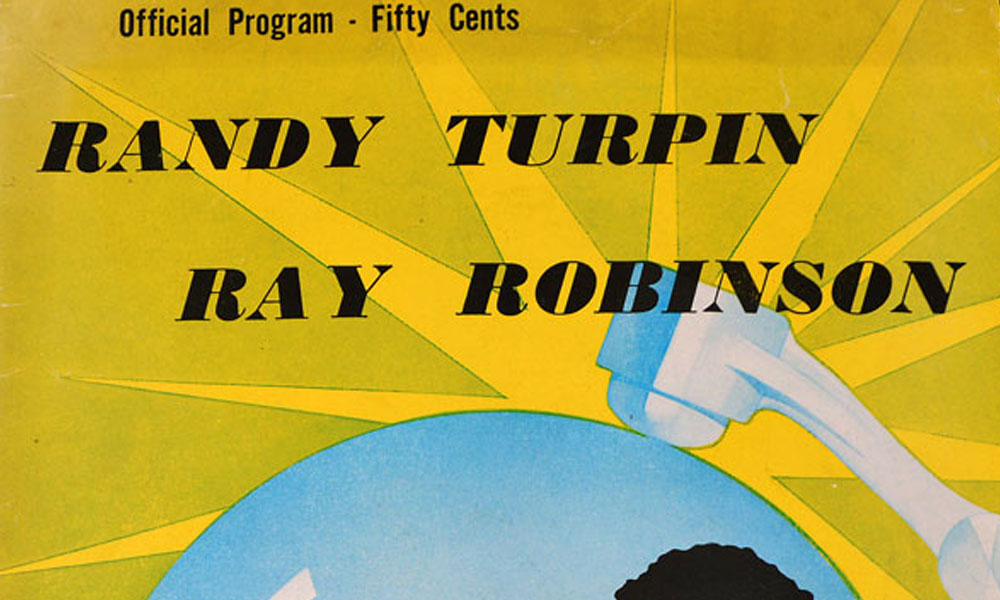
Football and boxing have long shared much of the same audience. Both sports grew through local pride, working-class communities, famous venues and personalities capable of capturing the public imagination. Supporters who filled football grounds on Saturday afternoons might attend boxing halls during the week or follow major championship contests through newspapers and radio.
It is therefore unsurprising that many collectors of football memorabilia eventually become interested in boxing programmes. These publications preserve fight cards, photographs, advertisements and contemporary opinions in much the same way that football issues record fixtures and teams. From celebrated title bouts to small local promotions, they offer another vivid route into sports history.
A Natural Companion to Football Collecting
Football collectors are already familiar with the appeal of printed matchday material. They understand how a modest publication can place a sporting occasion within its original time and setting.
A boxing issue performs a similar role. It identifies the venue, promoter, officials and scheduled fighters, while advertisements reveal the businesses and entertainment culture surrounding the event. Editorial features may introduce the main contenders, examine previous results or discuss the wider state of the sport.
Both hobbies also reward attention to detail. A changed opponent, an altered bill or a rare venue can transform an apparently ordinary item into something much more interesting. Condition, completeness, provenance and significance all help determine collectability.
For somebody who already enjoys football programmes, moving into boxing print feels less like beginning an unrelated hobby and more like extending an existing sporting archive.
What Appears Inside a Fight Programme?
The contents vary according to the period, venue and importance of the promotion. A major championship contest might receive a substantial souvenir publication filled with biographies, training photographs, records and predictions. A small local show could be represented by a folded card containing little more than the evening’s bill.
Most examples identify the headline contest and supporting fights. They may list each boxer’s weight, hometown, record or corner team. Space is sometimes provided for spectators to record results, making annotated copies especially evocative.
Programmes can also contain messages from promoters, profiles of former champions, venue histories and advertisements for bookmakers, public houses, outfitters and local manufacturers. These details help recreate the social world around the ring.
As with football material, printed information was not always final. Injuries, withdrawals and last-minute substitutions could make the published card inaccurate before the first bell sounded.
-
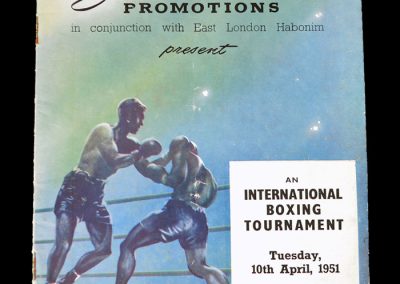
Royal Albert Hall 10.04.1951
-
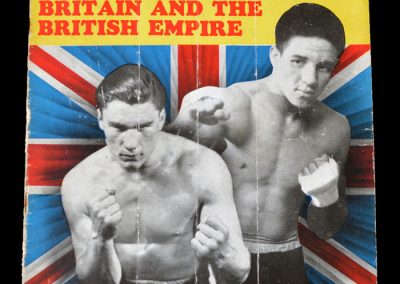
Cockell v Turpin 10.06.1952
-
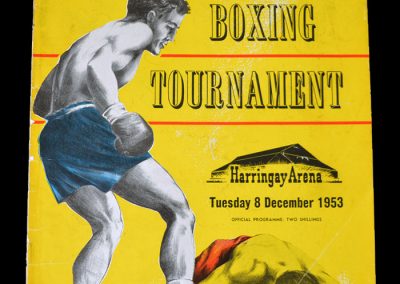
Pompey v King 08.12.1953
-
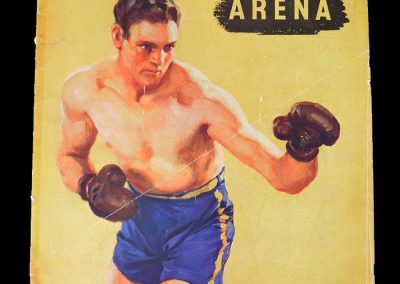
Harvey v Philipps 01.12.1938 (GB Heavyweight Championship)
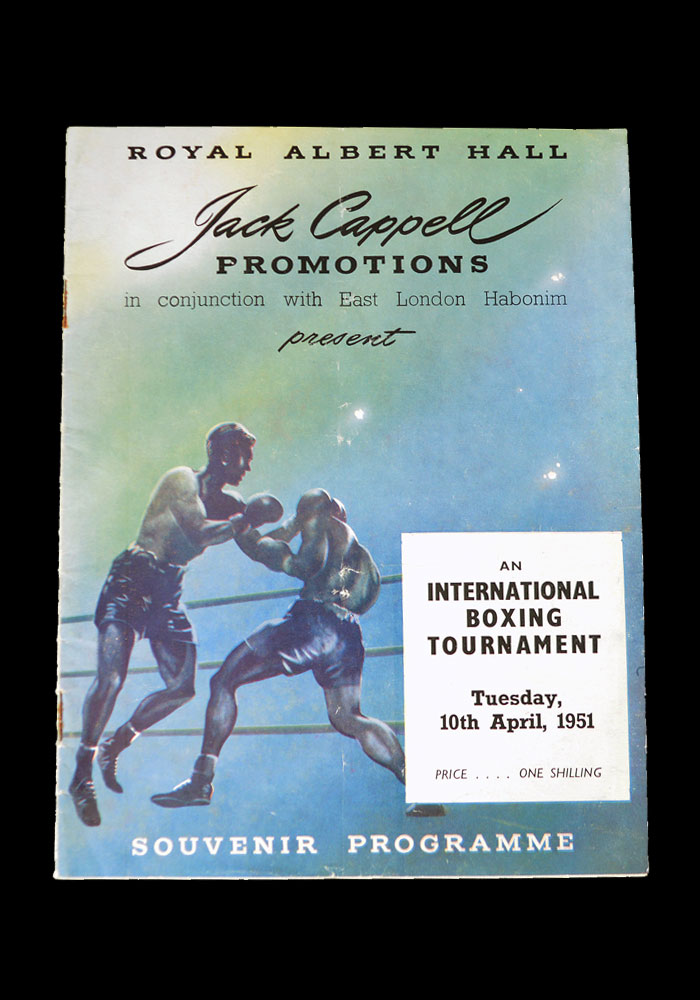
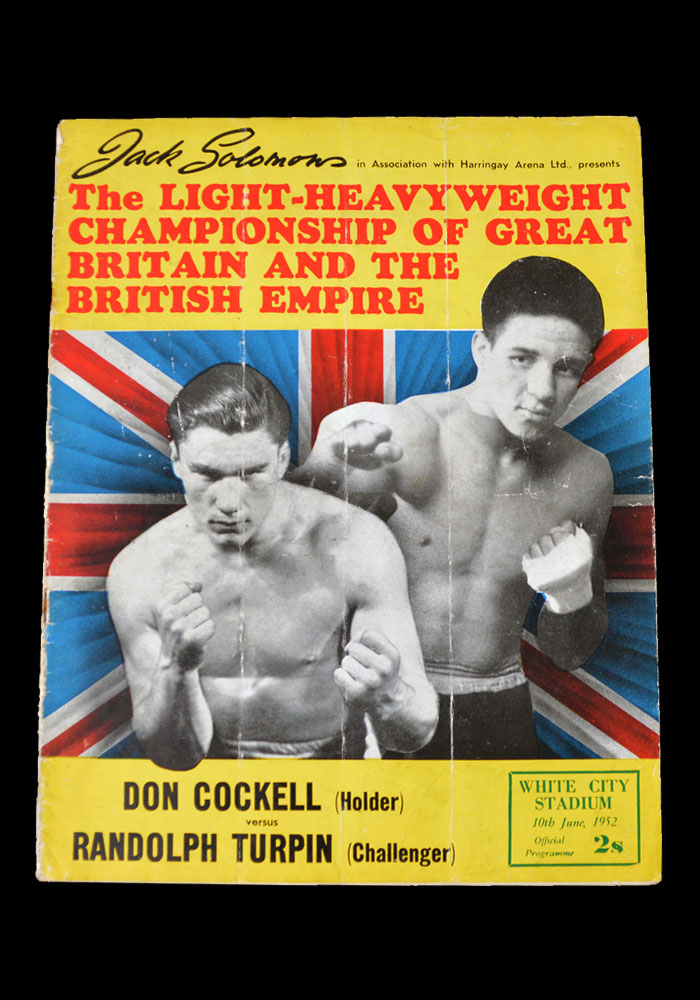
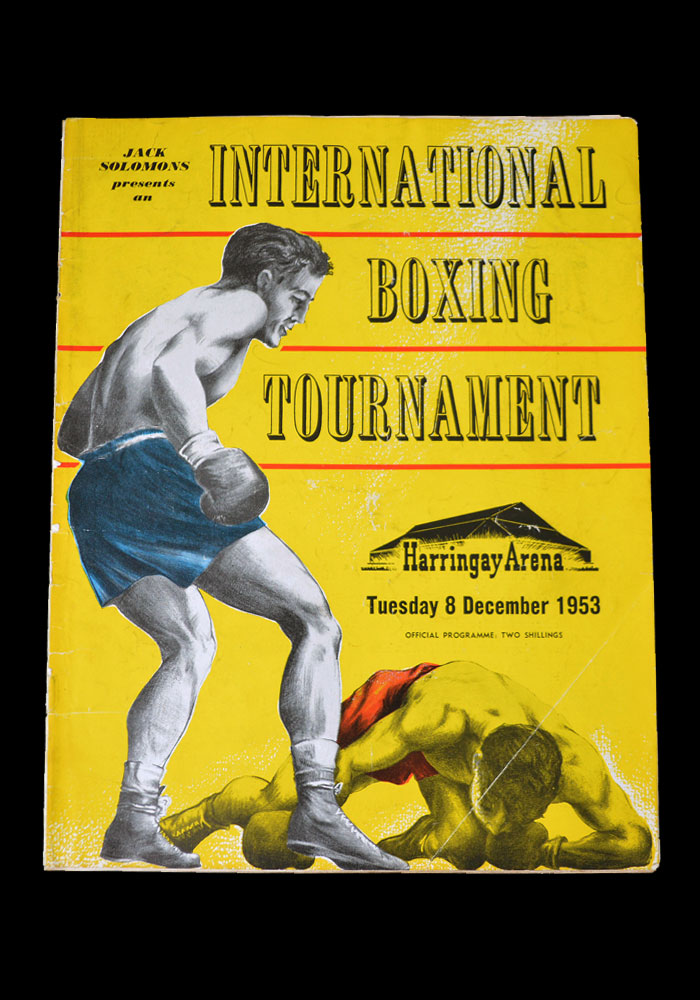
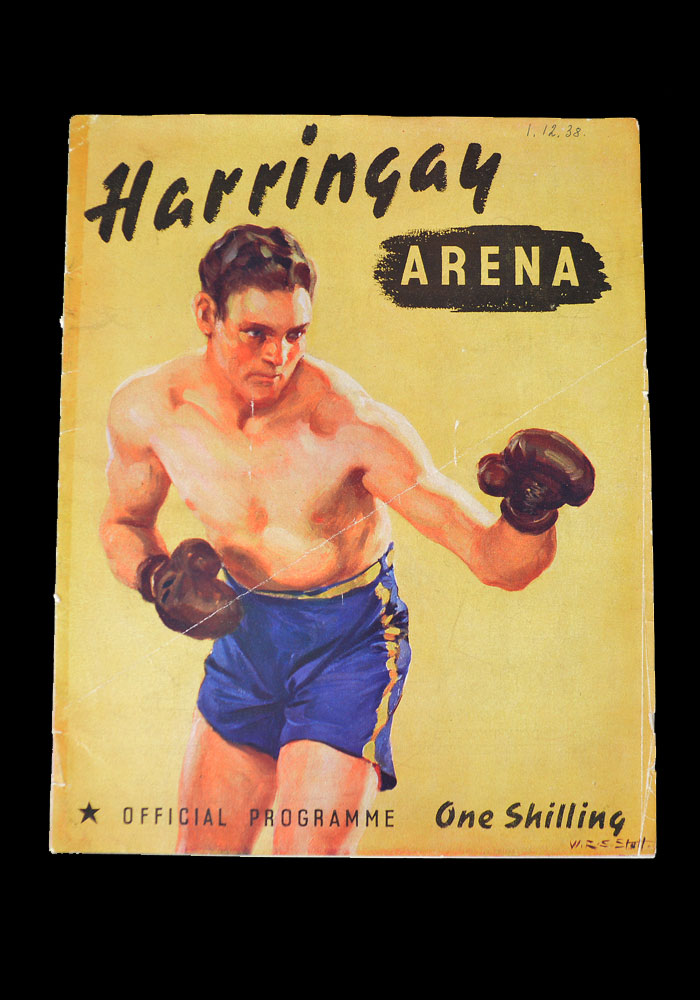
Famous Championship Fight Bills
Programmes from major title contests naturally attract attention. A fight involving a celebrated champion, dramatic upset or defining rivalry has immediate historical importance.
Collectors may seek publications connected with British greats, world championship nights or contests that changed the direction of a division. The venue can add another layer of appeal. Programmes from famous halls, stadium fights and promotions staged before enormous crowds preserve occasions when boxing became a major public spectacle.
A headline name does not automatically make every issue rare. Large fights sometimes generated substantial print runs, while programmes were deliberately saved as souvenirs. Conversely, a lower-profile contest from early in a champion’s career may be much harder to find.
Researching the complete bill can reveal further significance. A future champion might have appeared in a supporting contest years before becoming famous, giving an otherwise overlooked programme an unexpected connection.
The Charm of Local Boxing Shows
Small-hall boxing holds a different appeal. Local promotions were staged in town halls, social clubs, drill halls, theatres and leisure centres across Britain. Their programmes record fighters whose careers may have unfolded far from national headlines but who attracted loyal regional followings.
These publications can be scarce because relatively few were printed and even fewer were preserved. Many were treated as disposable notices rather than valuable souvenirs. Thin paper, simple production and handwritten amendments are all common.
For local historians, they provide evidence of venues, promoters and sporting communities that may otherwise be poorly documented. A single fight card can connect boxers, trainers, businesses and spectators within one town.
Football collectors often appreciate this regional character. A programme from a local boxing show can sit naturally beside issues from a nearby football club, together illustrating how sport developed within the same community.
Football Grounds as Boxing Venues
One of the clearest connections between the two sports is the use of football stadiums for boxing. A major outdoor fight could transform a familiar pitch into an arena, bringing fight supporters into a place normally associated with league fixtures and cup ties.
Programmes from stadium contests appeal to several groups at once. Boxing enthusiasts may want the fight, football supporters the ground, and venue collectors the unusual use of a familiar location.
The publication might contain photographs of the stadium, seating plans or messages from football officials. Such details show how clubs used their grounds beyond the regular season and how promoters attempted to accommodate huge audiences.
Weather, lighting and visibility made outdoor promotions unpredictable, but they could produce an atmosphere that an indoor hall could not replicate. The programme remains the most tangible souvenir of that temporary meeting between football and boxing.
Crossover Stars and Shared Supporters
The relationship between the sports also appears through individual personalities. Some footballers trained in boxing to improve fitness, while boxers supported clubs publicly, attended matches or became closely identified with their home cities.
Benefit events and charity contests occasionally brought players and fighters onto the same bill. Sporting celebrities might appear as guests, presenters or subjects of programme features. Promoters understood that a familiar football name could appeal to supporters who followed both games.
The shared culture was particularly strong when sporting heroes represented local aspiration. A successful boxer and a popular footballer could become symbols of the same town, even though they competed in very different environments.
These crossover connections give collectors a useful theme. Rather than attempting to acquire every boxing publication, a football fan could focus on fights held at club grounds, boxers associated with a favourite team or programmes featuring sporting personalities from one region.
Postponements, Substitutions and Altered Bills
Fight programmes contain their own versions of the oddities found in football collecting. A contest may be postponed, a headline fighter may withdraw or the bill may change after printing.
Handwritten alterations can be historically valuable when they were made at the event. Spectators often recorded winners, points decisions and stoppage rounds, turning the publication into a personal record of the evening.
Official inserts or overprinted corrections are worth retaining. Loose amendments are easily separated, and complete examples may be difficult to locate decades later.
Collectors should verify that a claimed programme corresponds to the fight that actually occurred. Promotional souvenir publications, official event programmes and later commemorative booklets can look similar, but they do not necessarily have the same connection to the ringside occasion.
Condition and Completeness
Older boxing programme publications were not always made to last. Staples rust, covers become detached and lightweight pages tear easily. Results may have been written inside, coupons removed or photographs cut out.
Condition affects desirability, but an imperfect programme can still be important if the event is rare. Ringside annotations may even add character, particularly when they accurately record changes or results.
Check the page count and look for missing fighter photographs, scorecards or inserts. Posters, tickets and handbills associated with the same show can create an attractive complete set, although their relationship to the programme should be established carefully.
Storage should protect paper from light, moisture and pressure. Acid-free sleeves and supportive backing can help fragile items retain their shape without permanent alterations.
Building a Collection with a Clear Theme
The scale of boxing history can initially seem daunting. A clear collecting theme makes the subject more manageable and personal.
A collector might concentrate on British title fights, one venue, a favourite boxer or shows promoted within a particular county. Others may seek programmes from fights staged at football grounds or build paired collections around famous sporting years.
Research is an important part of the enjoyment. Contemporary newspapers, boxing records and venue histories can explain the significance of supporting contests and identify fighters who later achieved greater success.
Two Sports, One Printed Heritage
Boxing programmes belong comfortably beside football issues because both preserve the atmosphere surrounding live sport. They record famous names, local hopes, changing venues and the businesses that helped make each occasion possible.
For football supporters, the crossover can begin with a familiar ground, hometown fighter or shared sporting hero. From there, local bills and championship nights open another rich field of collecting.
Together, these publications reveal a broader sports history than either could tell alone. They show crowds moving between terraces and ringsides, following different contests but carrying the same appetite for drama, identity and unforgettable live occasions.