
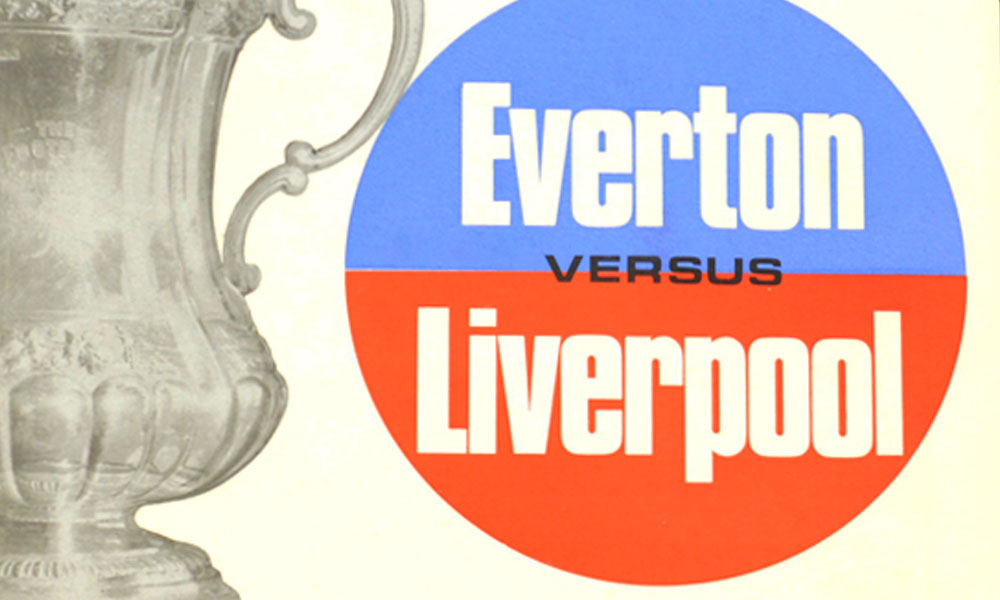
A local derby is rarely just another fixture. It can divide families, workplaces, neighbourhoods and entire cities, creating an atmosphere shaped by geography as much as league position. Even when neither team is challenging for a trophy, victory can define the mood of supporters until the clubs meet again.
Football programmes capture this intensity in ways that ordinary match reports cannot. Their covers, editorials, photographs and advertisements show how clubs presented their rivalries at particular moments. Some emphasised friendship and shared identity; others understood perfectly well that the afternoon required no additional promotion.
For collectors of old football programmes, derby editions offer a revealing journey through football history and the changing character of the communities surrounding the game.
When the Cover Sets the Mood
The cover is a programme’s first opportunity to acknowledge the occasion. Some derby issues announce the rivalry boldly through contrasting colours, action photographs or images of both clubs’ badges. Others use cartoons, local landmarks or artwork showing two opposing figures preparing for battle.
Earlier covers were often more restrained. A standard club design might be used for every home fixture, with only the opponents and date changed. This understatement can be evocative in its own way. The ordinary appearance contrasts with the extraordinary importance supporters attached to the match.
Cup derbies and decisive league meetings tend to inspire more elaborate designs. Words such as “showdown”, “battle” and “city pride” appear frequently, although clubs sometimes avoid inflammatory language when tensions are already high.
Comparing covers across several decades reveals how a rivalry was marketed as well as how printing and design developed.
Editorials Between Respect and Rivalry
Chairmen’s notes, manager columns and editorial introductions often attempt a careful balance. The visiting club is welcomed formally, its achievements recognised and supporters encouraged to enjoy the fixture responsibly.
Beneath these courtesies, the importance of victory is usually clear. References to recent results, disputed incidents and memorable wins remind readers what is at stake. A manager may insist that the players will treat it like any other game before devoting most of the column to its special significance.
Editorial language also reflects its period. Older issues can use local expressions or assumptions that would be unlikely to appear in modern club communications. Contemporary programmes are generally more conscious of safety, inclusion and the global audiences following major derbies.
These pages offer valuable evidence of how clubs tried to shape the story surrounding a rivalry.
Everton and Liverpool: One City in Two Colours
The Merseyside derby has often been described through family connections, with red and blue loyalties existing within the same households. Programmes reflect that closeness while recording an intensely competitive relationship.
Historic issues can be particularly rich in local advertising, linking both clubs to the businesses, streets and industries of Liverpool. Player features sometimes reveal further connections through individuals who represented both teams or grew up within the city’s football culture.
The covers may focus on famous goalscorers, packed terraces or the visual contrast between the clubs’ colours. Cup meetings and fixtures connected with title races add another level of desirability.
For collectors, Merseyside programmes demonstrate how a derby can combine shared civic identity with fierce sporting division.
North London in Print
Meetings between Arsenal and Tottenham Hotspur have produced programmes filled with league significance, star players and arguments about local supremacy. North London derby issues from successful periods for either side can be especially evocative.
Programme notes often revisit earlier encounters, using archive photographs to build a sense of continuity. A recent dramatic result may be remembered alongside meetings from decades before, reminding supporters that the current players have entered an established story.
Cover designs frequently celebrate leading figures, although an image selected before the match can acquire unintended meaning afterwards. A featured player might score the winner, miss a crucial chance or become central to a controversial incident.
Collecting both home versions from a season allows the rivalry to be viewed through two different editorial voices.
Manchester’s Changing Balance
Manchester City and Manchester United programmes chart one of English football’s most interesting shifts in power. Across different periods, each club has approached the derby from a changing position of confidence, pressure or ambition.
Older issues capture a more locally concentrated football culture, with supporters travelling relatively short distances and players often closely associated with the region. Later publications reflect the enormous global attention attached to the fixture.
Editorials and statistics show how clubs use history selectively. A dominant recent record may receive extensive coverage, while an inconvenient defeat is treated more briefly. Anniversary derbies, cup meetings and matches from championship seasons tend to attract particular interest.
Together, the programmes demonstrate that rivalries are never static. Their meaning changes with ownership, success, stadium moves and the expectations of supporters.
The Tyne–Wear Rivalry
Newcastle United against Sunderland brings together two strongly defined football identities. Programmes from these fixtures often draw heavily on regional pride, historic meetings and the atmosphere created by travelling supporters.
Black-and-white and red-and-white imagery gives designers an immediate visual contrast. Covers can feature packed stands, local landmarks or players associated with memorable derby moments.
The editorials frequently acknowledge the emotional weight of the game while calling for discipline on the pitch and in the stands. When the clubs have been separated by divisions, a renewed meeting can give the programme added importance.
Tyne–Wear issues are particularly rewarding when paired with tickets, team sheets or local newspaper reports, creating a fuller record of the matchday.
Glasgow and Scotland’s Fiercest Fixtures
Celtic and Rangers programmes document a rivalry with sporting, religious, cultural and political dimensions. Because its significance extends beyond the result, official wording is often carefully controlled.
Issues connected with title deciders and cup ties naturally attract attention, but routine league meetings can also hold strong historical interest. Player profiles, photographs and formal messages provide a club-approved perspective on an occasion carrying enormous meaning outside the printed pages.
Scotland offers many other compelling derbies. Hearts and Hibernian programmes tell the story of Edinburgh football, while Dundee and Dundee United issues record a remarkably close geographical rivalry. Fixtures involving clubs from the same town or neighbouring communities often contain the strongest sense of place.
These publications show that the emotional scale of a derby is not determined solely by stadium size or international fame.
Rivalries Beyond Britain
The same programme-collecting approach can be extended overseas. Matches such as AC Milan against Inter, Real Madrid against Atlético Madrid or Boca Juniors against River Plate produce publications shaped by their own cities and football cultures.
Language, graphic design and publication formats may differ from familiar British examples. Some clubs produce glossy magazines, while others issue more modest team sheets or match guides. Translating editorial content can uncover references to neighbourhood, class, migration and changing club identity.
European competition also creates occasional cross-border rivalries with derby-like intensity. Programmes from such matches reveal how each club explains the opposition to its own supporters.
For collectors interested in football history internationally, overseas derby issues provide a way to compare how local identity is represented across different cultures.
Condition, Variants and Matchday Details
Derby programmes were often handled heavily. Supporters folded them into pockets, marked team changes and carried them through crowded terraces. Clean copies are desirable, but evidence of use can add character when it genuinely belongs to the occasion.
Look for postponed fixtures, cover variants, late inserts and separate team sheets. High demand sometimes encouraged unofficial or commemorative publications, so collectors should confirm exactly what was issued by the home club.
The result also affects interest. A debut goal, record victory, title-changing outcome or final meeting at an old ground can transform a standard derby issue into a significant collectable.
Two Clubs, Two Versions of the Same City
Derby programmes do more than introduce opposing teams. They reveal how clubs describe neighbours they know intimately and rivals they are determined to defeat.
Through cover artwork, carefully chosen language and memories of previous meetings, each issue frames the contest for its own audience. Read together over many seasons, old football programmes show rivalries changing alongside grounds, players and communities.
That is what makes derby collecting so compelling. Every publication belongs to one match, but it also forms another chapter in an argument that may have lasted for generations—and is unlikely ever to be settled completely.