
Rugby league programmes offer a distinctive view of British sporting life. Closely associated with industrial towns across Lancashire, Yorkshire and Cumbria, they record a game built around local loyalties, demanding conditions and communities with deep attachments to their clubs.
For collectors familiar with football publications, rugby league provides both recognisable features and intriguing differences. Team lists, chairman’s notes, player profiles and local advertisements may feel familiar, but the language, competitions and matchday culture belong to another sporting tradition.
From major finals to ordinary winter fixtures played on unforgiving grounds, these publications preserve an important strand of sports history and make a rewarding addition to a broader programme collection.
A Game Shaped by Northern Communities
Rugby league developed a particularly strong identity in northern England, where clubs became closely connected with the towns they represented. Teams from former mining, textile, manufacturing and dock communities carried local rivalries onto the pitch.
The programme was part of that relationship. It communicated club news, introduced visiting teams and recognised the local companies supporting the game. The advertisements can be as revealing as the sporting content, featuring engineering firms, working men’s clubs, public houses, outfitters and family businesses.
For a collector, these details turn a matchday publication into a piece of local social history. A fixture between two traditional rivals becomes evidence of how those communities saw themselves and one another at a particular point in time.
Football supporters will recognise the intensity of this town-based identity. In many places, football and rugby league existed side by side, drawing support from overlapping families, workplaces and neighbourhoods.
What Can Be Found Inside?
The earliest and simplest rugby programmes may contain little more than team lists, officials and brief notices. More substantial editions include club notes, league tables, player profiles, photographs and reports from previous matches.
Squad numbering and positional terminology give the pages a character distinct from football. Readers encounter full-backs, wingers, centres, half-backs and forwards, alongside discussions of scrums, tries, conversions and tactical battles.
Programmes may also include reserve-team information, amateur results and news from supporters’ clubs. In an era before websites and social media, these pages were an important connection between the club and its followers.
Fixture charts, competition tables and handwritten scores can reveal how the original owner followed the season. Such annotations do not always reduce an item’s historical interest. Neatly recorded changes or points scorers may bring the match back to life.
The Appeal of Traditional Grounds
Many rugby league grounds were shaped by necessity rather than architectural ambition. Tight terraces, basic stands and pitches surrounded by houses or industrial buildings created a strong sense of place.
Programmes from these venues preserve names and surroundings that have since disappeared. Ground moves, redevelopment and changing safety requirements have transformed the landscape, making printed evidence increasingly valuable.
A publication might include a photograph of a grandstand later demolished, directions for visiting supporters or an advertisement referring to a nearby factory that once dominated the skyline. Even routine content can become significant after a ground closes.
Football-minded collectors often appreciate venue history. Someone collecting programmes from lost football grounds may naturally extend the theme to rugby league, especially where the two sports used neighbouring sites or occasionally shared facilities.
-
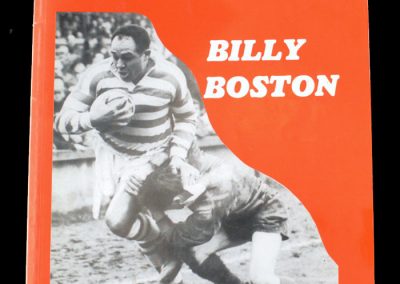
Living Legends of Rugby League (signed)
-
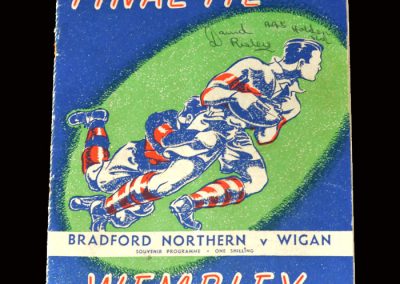
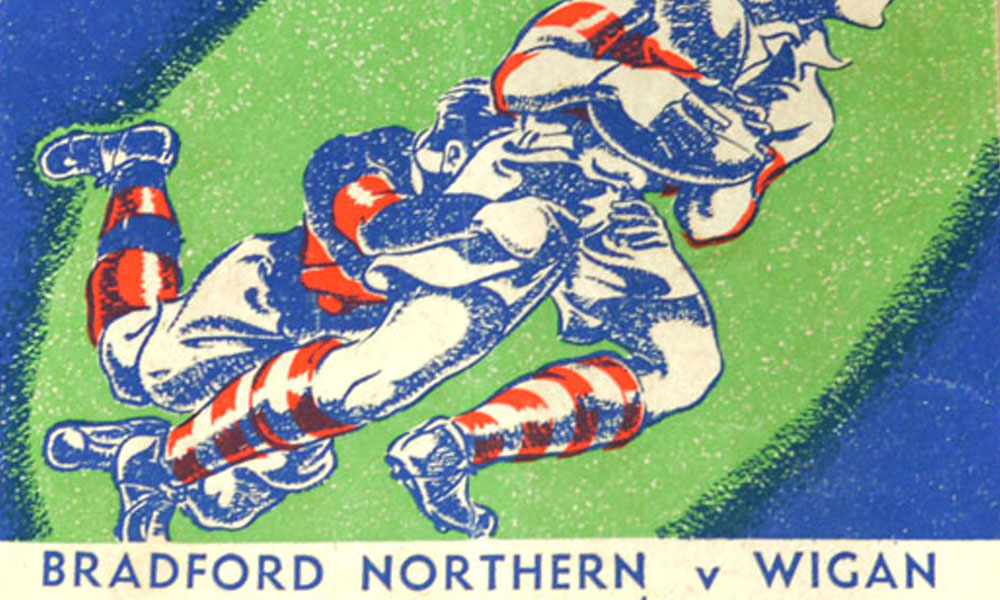
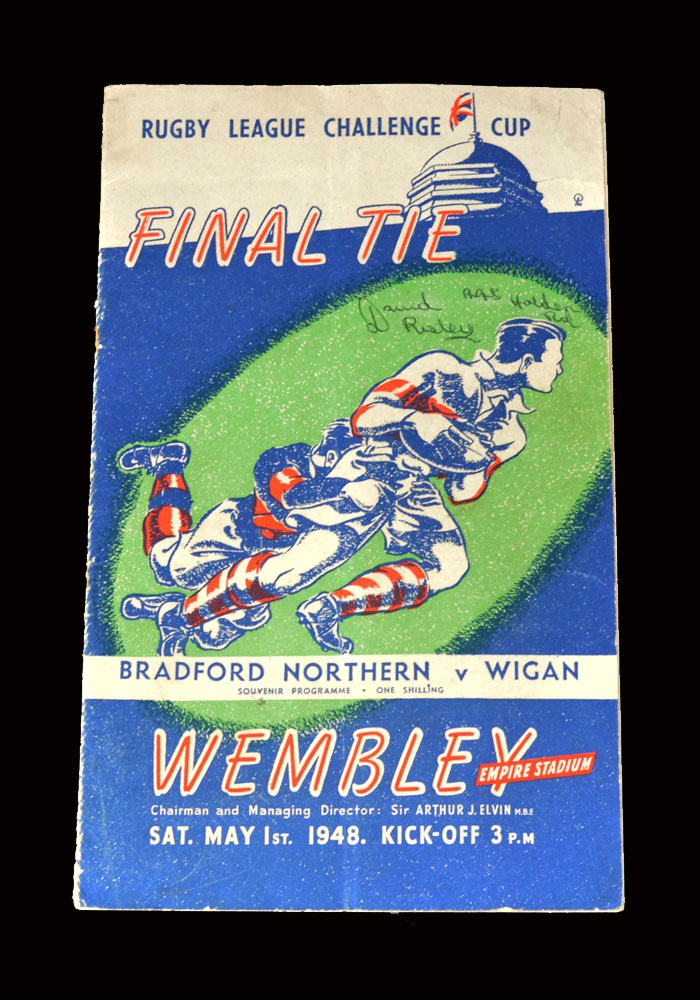
Bradford Northern v Wigan 01.05.1948 (Rugby League Final)
-
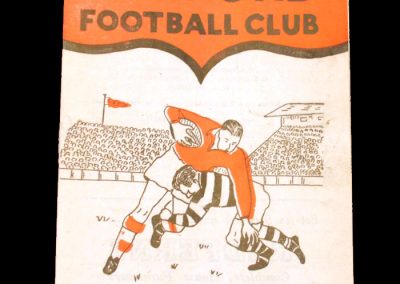
Salford v Warrington 02.04.1955 (Rugby League)
-

Doncaster v Bradford (Rugby League) 02.04.1955



Winter Matches on Hard and Muddy Pitches
Traditional seasons exposed players and spectators to severe conditions. Frozen turf, deep mud, snow and driving rain were part of the game’s image. The phrase “hard grounds” can describe both surfaces made unyielding by frost and venues known for uncompromising contests.
Programmes from winter fixtures carry this atmosphere even when they do not mention the weather directly. Cover photographs show heavy pitches and stained kits, while match reports describe difficult handling conditions or battles dominated by the forwards.
Postponements also produced collectable oddities. A programme might have been printed for a fixture abandoned to frost or snow, then reused when the teams eventually met. Official inserts, amended dates and alternative editions create variations for specialists to investigate.
These issues appeal because they capture a physical sporting culture far removed from perfectly prepared modern surfaces and climate-controlled hospitality.
Cup Finals and Major Occasions
Challenge Cup Finals are among the most recognisable rugby league collectables. Their programmes record clubs and supporters travelling from northern towns to a national stage, often turning the event into a major community occasion.
Final editions tend to contain more photographs, historical features and souvenir material than ordinary league issues. Some were printed in large numbers, so fame does not always mean rarity. Condition, year, competing clubs and accompanying items all influence interest.
Other desirable occasions include Championship deciders, international fixtures and important matches from historic tours. Games involving visiting Australian and New Zealand sides can be particularly appealing because they connect British club culture with the wider development of the sport.
A collector should also examine supporting fixtures and squad lists. A programme bought for its headline match may contain an early appearance by a player who later became internationally famous.
Local Fixtures Can Be the Scarcer Finds
High-profile programmes are the easiest starting point, but smaller club and reserve issues can be much more difficult to locate. Limited crowds, modest print runs and disposable formats all reduce survival rates.
A plain folded sheet from an ordinary fixture may be considerably scarcer than a colourful cup final publication saved by thousands of spectators. The difficulty lies in establishing demand as well as rarity. An item can be genuinely scarce without attracting the same competition as a famous final.
Collectors with an attachment to one town or club may find these lesser fixtures especially rewarding. Building a season involves tracing league games, cups, reserves, testimonials and friendlies that together show the full life of the club.
Local publications can also preserve opponents or competitions that later disappeared through mergers, relocations and league restructuring.
Connections with Association Football
The relationship between football and rugby league extends beyond geography. Players, administrators and supporters have sometimes moved between the two sporting worlds, while clubs shared local newspapers, sponsors and public attention.
Certain grounds hosted both codes, whether regularly or for one-off occasions. Wartime conditions, charity events and scheduling needs could produce unusual arrangements that interest venue collectors.
Programme advertisements may promote forthcoming football matches, while editorial columns sometimes refer to the fortunes of the town’s other sporting team. These connections demonstrate that supporters did not always live within neatly separated sporting cultures.
A football collection organised around a town can therefore feel incomplete without considering its rugby league story. The two sets of publications may document the same streets, businesses and generations from different sides of local sporting life.
Design, Printing and Changing Times
Rugby programmes followed many of the same publishing changes seen in football. Early editions were often text-heavy and economical, while later decades brought stronger cover design, action photography, colour printing and expanded commercial content.
Printing quality varied widely. Wealthier or higher-profile clubs could produce substantial publications, while smaller organisations continued using simple folded formats. This variation makes the field visually interesting and prevents age alone from determining appearance.
Modern editions increasingly compete with websites, social media and digital match centres. Some clubs have reduced printed output or adopted online-only formats, giving recent physical programmes a new kind of significance.
Collectors may eventually regard publications from the transition to digital communication as records of a disappearing matchday habit.
Building a Rugby League Collection
New collectors can begin with one club, ground, competition or season. Another approach is to collect programmes from towns where football and rugby league both played important roles.
Check every issue for missing pages, loose covers and removed photographs. Rusted staples and horizontal folds are common, particularly in publications carried in coat pockets on wet matchdays.
Handwritten team changes may be acceptable, but unexplained missing inserts can affect completeness. Tickets, team sheets and newspaper cuttings should be stored carefully alongside programmes when their connection to the match is clear.
Researching venues, competitions and club changes will make individual items more meaningful and help distinguish ordinary editions from genuinely unusual ones.
A Broader Picture of Sporting Britain
Rugby league’s printed heritage deserves attention beyond the sport’s established collecting community. Its programmes tell stories of northern towns, industrial identities, famous finals and weekly contests played through difficult winters.
For football collectors, the similarities provide an accessible entry point, while the differences open an entirely new field. The publications use familiar matchday ingredients but create a sporting atmosphere all their own.
Placed beside football material, rugby programmes broaden the story from one code to the culture surrounding British spectator sport. They preserve hard grounds, close rivalries and communities whose histories were written not only in factories and streets, but also on pitches every weekend.