
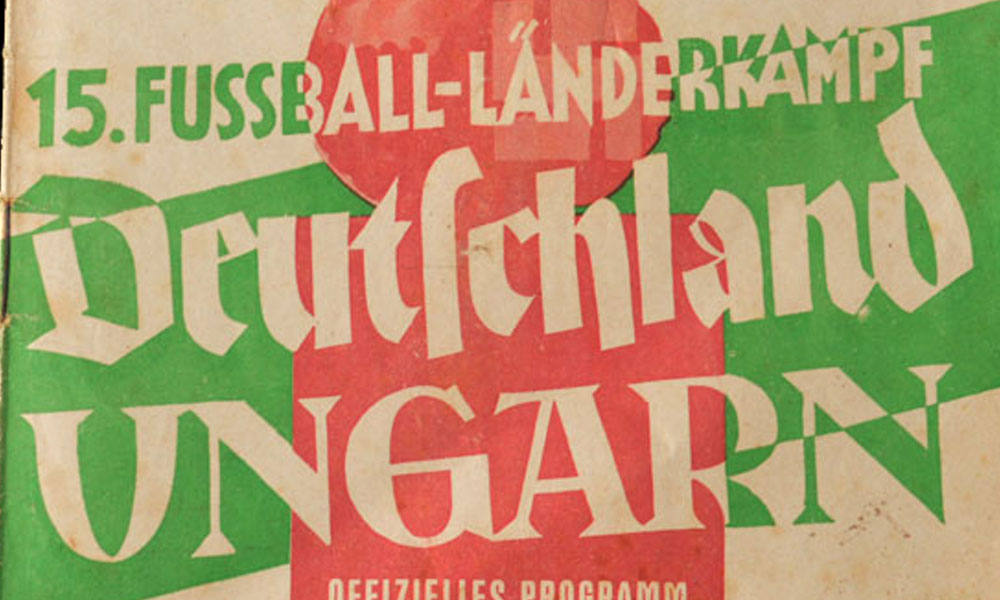
Football likes to present itself as an escape from everyday concerns. For 90 minutes, attention turns towards players, tactics and the result. Yet clubs and supporters have never existed separately from the societies around them.
Wars disrupted competitions and changed teams. Elections brought politicians to stadiums and placed football within debates about towns, spending and national identity. Industrial disputes affected the communities supporting clubs, while campaigns against racism and discrimination became part of matchday communication.
Football programmes provide an especially revealing record of these moments. Alongside team lists and match reports, their editorials, official notices, advertisements and photographs show how clubs responded when the wider world entered the ground.
Wartime Programmes and a Changed Game
War transformed football more dramatically than almost any political event. National competitions were suspended or reorganised, players entered military service and clubs relied on guests who happened to be stationed nearby.
Old Programmes from wartime fixtures can be modest publications, reflecting shortages of paper, labour and money. Some contain appeals for national funds, messages to service personnel or references to air raids and disrupted transport.
Team selections were often uncertain. A player named in print might be unavailable by kick-off, while a famous guest could appear unexpectedly. Handwritten amendments therefore form part of the story rather than merely being damage.
The tone could combine determination with solemnity. Football offered recreation and routine, but programme notes acknowledged absent players, supporters serving overseas and those who had been killed.
Such issues show the sport adapting to circumstances far beyond the control of clubs or governing bodies.
Remembering Conflict After the Final Whistle
Programmes continued to reflect war long after normal competitions resumed. Memorial matches, benefit fixtures and anniversary occasions commemorated players, officials and supporters lost in conflict.
Remembrance features might include rolls of honour, photographs, historical essays or explanations of minute silences. Military bands and service representatives were sometimes included within the matchday proceedings.
European fixtures added another dimension during the post-war decades. Visits between clubs from countries that had recently been enemies could be framed as signs of friendship and reconstruction. Editorial notes welcomed foreign guests while acknowledging the difficult history connecting the nations involved.
For collectors, these publications are more than sporting souvenirs. They demonstrate how football participated in commemoration, reconciliation and the creation of shared public memory.
General Elections Around the Ground
Clubs usually avoid direct party-political endorsements, but election periods can still leave marks on matchday publications. Candidates may appear in local advertising, public information notices might remind supporters about voting, and editorial columns can discuss decisions affecting the club’s area.
Football grounds have also been used for political visits, public meetings and campaign photographs. Where these events overlap with the matchday calendar, programmes can provide indirect evidence through official welcomes, stadium news or local commentary.
Political questions affecting transport, policing, regeneration and stadium development are particularly likely to appear. A council decision about land or planning may have consequences for a club’s future, making local politics impossible to ignore.
The most interesting programme notes are not always openly partisan. Their choice of language can reveal how club officials positioned an issue while attempting to maintain unity among supporters with different views.
Industrial Disputes and Football Communities
Many British clubs developed within towns shaped by mining, shipbuilding, steel, textiles, engineering and other major industries. When those industries faced closures or strikes, the impact reached the terraces.
Programmes sometimes recorded fundraising collections, benefit events and messages of support for affected families. Local advertisements could disappear when businesses struggled, while editorial notes acknowledged unemployment and uncertainty.
During the miners’ strikes, clubs in coalfield communities played before supporters experiencing profound financial and social pressure. Even where programme editors avoided direct political arguments, references to food collections, charity efforts or declining attendances told their own story.
These pages help place football within local economic history. The club was not simply located in the town; its fortunes were connected to the livelihoods and confidence of the people living there.
A publication from an apparently ordinary fixture can therefore preserve evidence of a community under exceptional strain.
Campaigning Against Racism
Racism has affected players and supporters throughout the modern history of football. Programme content reveals changing attitudes, from periods when abuse received little official acknowledgement to increasingly direct anti-racism messages.
Clubs began using matchday pages to support campaigns, publish codes of conduct and condemn discriminatory behaviour. Player interviews sometimes addressed personal experiences, while photographs showed teams backing national or local initiatives.
The language used is important. Earlier statements may appear cautious by modern standards, whereas later editions tend to identify specific forms of discrimination and explain reporting procedures more clearly.
These features do not prove that problems were solved. However, they show when clubs publicly recognised them and what they asked supporters to do.
Collecting issues connected with landmark campaigns can help trace how football institutions changed their official response over time.
Equality, Inclusion and Social Change
Programme notes have also addressed sexism, homophobia, disability access, mental health and broader inclusion. Dedicated fixtures may celebrate community groups, women’s teams or campaigns encouraging more people to participate in football.
Some editions use special covers, captain’s messages or interviews with supporters. Others provide practical information about accessible facilities, reporting discrimination or finding support.
The development of women’s football is particularly visible. Programmes can show changing coverage, from occasional mentions deep inside men’s matchday publications to prominent features celebrating club teams and international players.
Social campaigns may sometimes feel temporary or heavily branded, but the printed record allows later readers to assess what was said and whether the commitment continued. A programme freezes the club’s public position at that moment.
National Identity and International Matches
International programmes often carry political meaning even when their official tone remains diplomatic. National anthems, flags, royal or presidential messages and formal welcomes all present ideas about identity and representation.
Matches involving politically sensitive opponents can make the wording especially careful. Programme editors may emphasise friendship through sport while avoiding disputes surrounding the countries involved.
Changes to nations and borders are also recorded in fixture lists and team names. Programmes from countries that later divided, united or changed political systems can become important historical documents.
Boycotts, diplomatic tensions and eligibility disputes occasionally affect whether fixtures take place at all. A publication produced before a cancellation can become a rare reminder of a match overtaken by political events.
For football history collectors, these issues show how international sport can both reflect national divisions and provide a controlled space in which countries meet.
Disasters, Tributes and Calls for Change
Football programmes have responded to tragedies inside and outside the game. Memorial covers, black borders and messages of condolence record moments when competition became secondary.
Following stadium disasters, programme notes also participated in debates about safety, policing and supporter treatment. Later issues explained altered ground arrangements and recognised campaigns led by bereaved families.
Tribute editions can carry enormous emotional significance. They may include names, personal memories, poems and photographs contributed by supporters. Unlike routine publications, they often become communal memorials.
Collectors should approach such material respectfully. Its value cannot be measured solely through scarcity or price, and descriptions should acknowledge the people and events represented.
Advertisements as Unintended Commentary
Political and social history appears outside editorials too. Advertisements reveal public priorities, working patterns and accepted attitudes.
Recruitment notices can show which industries dominated a town. Public-service campaigns may address drink-driving, health, military service or road safety. Language and imagery expose how gender roles and family life were presented at different times.
What appears normal in one decade may feel striking in another. That makes advertising pages valuable evidence rather than filler between football features.
Changes in sponsors also reflect broader economic and regulatory developments. Industries once prominent around the game may later retreat, disappear or face restrictions, leaving programmes as records of their former influence.
Reading the Matchday Booklet as Social Evidence
Not every programme offers outspoken political commentary. Clubs often prefer neutral language, particularly when subjects risk dividing supporters. Silence and caution can nevertheless be informative.
Collectors should read the whole publication: official columns, community pages, advertisements, charity notices and even transport information. The wider context may emerge through several small references rather than one dramatic statement.
Comparing issues from different clubs can show contrasting responses to the same event. A national crisis may be central to one community and barely mentioned elsewhere.
Where the Wider World Entered the Stadium
Football programmes remind us that the game has never taken place in isolation. Players went to war, supporters lived through strikes and clubs negotiated changing attitudes towards race, identity and equality.
The matchday booklet sometimes supported official campaigns, occasionally offered direct opinion and often recorded social change unintentionally. Its pages preserve not only what clubs wanted supporters to know, but also the assumptions and pressures of the period.
That is why football programmes matter beyond collecting. Read carefully, they turn football history into a wider story about work, politics, conflict and community—with the match providing the setting, but never the whole picture.